


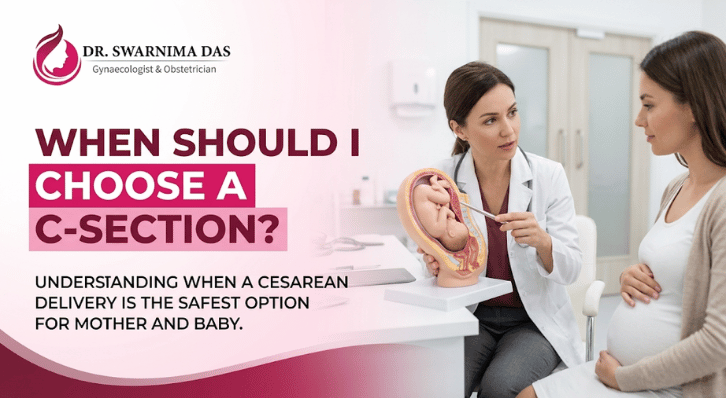
Many expectant mothers ask, “when should I choose a C-section?” especially when planning a safe delivery. A cesarean section (C-section) is a surgical procedure used to deliver a baby through incisions in the abdomen and uterus.
While normal vaginal delivery is often preferred, there are situations where a C-section becomes medically necessary or safer for the mother and baby. Understanding when and why helps you make informed decisions.
What Is a C-Section?
A C-section (cesarean delivery) is a surgical method of childbirth performed when vaginal delivery may not be safe.
It may be:
- Planned (elective) – decided before labor
- Emergency – performed during labor due to complications
The decision is based on clinical evaluation, not just preference.
When Is a C-Section Recommended?
Doctors recommend a C-section when there are risks to the mother or baby during vaginal delivery.
Common scenarios include:
- Labor is not progressing (prolonged labor)
- Baby is in an abnormal position (breech or transverse)
- Signs of fetal distress (abnormal heart rate)
- Placenta previa (placenta covering the cervix)
- Previous multiple C-sections
- Certain high-risk pregnancies
The goal is always safe delivery, not convenience.
Common Medical Reasons for C-Section
1. Fetal Distress
If the baby is not receiving enough oxygen, immediate delivery may be required.
2. Placenta Previa
The placenta blocks the birth canal, making vaginal delivery unsafe.
3. Prolonged or Obstructed Labor
Labor that does not progress despite contractions may require surgical intervention.
4. Multiple Pregnancy
Twins or higher-order pregnancies may increase the need for a C-section.
5. Maternal Health Conditions
Conditions like:
- High blood pressure (preeclampsia)
- Diabetes complications
- Infections
may influence delivery decisions.
Planned vs Emergency C-Section
Planned C-Section
- Scheduled before labor begins
- Based on known medical conditions
- Allows preparation and discussion with doctor
Emergency C-Section
- Decided during labor
- Performed due to sudden complications
- Requires quick medical response
Both aim to ensure maternal and fetal safety.
C-Section vs Normal Delivery – Key Differences
| Factor | Normal Delivery | C-Section |
|---|---|---|
| Method | Vaginal birth | Surgical procedure |
| Recovery | Faster | Longer recovery |
| Hospital Stay | Shorter | Slightly longer |
| Risk | Lower surgical risk | Surgical risks present |
| Use Case | Low-risk pregnancy | Complicated/high-risk cases |
Neither method is “better” universally. The safest option depends on individual conditions.
Risks and Benefits of C-Section
Benefits
- Can prevent complications in high-risk cases
- Controlled environment in planned cases
- Reduces risk of birth trauma in certain conditions
Risks
- Longer recovery time
- Risk of infection or bleeding
- Surgical complications (rare but possible)
- Impact on future pregnancies
Doctors weigh these carefully before recommending surgery.
Can You Choose a C-Section?
Some women consider choosing a C-section due to:
- Fear of labor pain
- Previous traumatic delivery
- Personal preference
However:
- Not all cases are medically appropriate for elective C-section
- Doctors evaluate safety before agreeing
- Counseling is often provided to explain risks and benefits
Shared decision-making with your obstetrician is important.
Can Normal Delivery Turn Into a C-Section?
Yes, even if you plan for vaginal delivery, a C-section may be required if:
- Labor stops progressing
- Baby shows signs of distress
- Complications arise suddenly
This is common and part of safe obstetric care.
When Should You Consult Your Doctor?
You should discuss delivery options if you have:
- High-risk pregnancy
- Previous C-section
- Twin or multiple pregnancy
- High blood pressure or diabetes
- Concerns about labor or delivery safety
Medical Disclaimer
This content is for educational purposes only. It is not a substitute for professional medical advice. Always consult a qualified obstetrician for decisions regarding your pregnancy and delivery.