


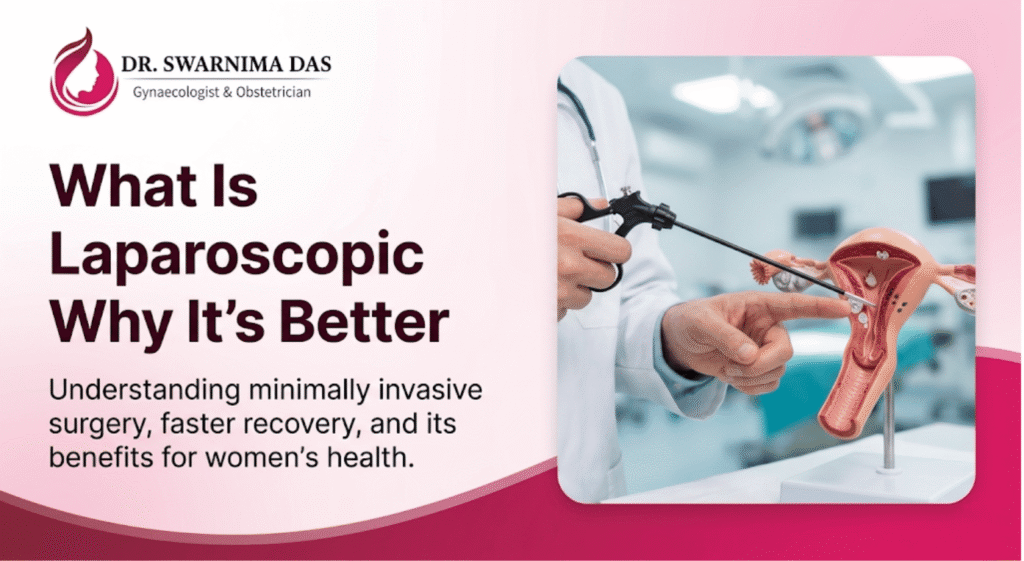
Many patients ask what is laparoscopic surgery after being advised to undergo a minimally invasive procedure. Laparoscopic surgery, also called “keyhole surgery,” is a modern surgical technique performed through small incisions using a camera and specialized instruments.
Compared to traditional open surgery, laparoscopy often offers faster recovery, less pain, and smaller scars for selected medical conditions.
What Is Laparoscopic Surgery?
Laparoscopic surgery is a minimally invasive surgical procedure where doctors operate through small cuts instead of one large incision.
A thin tube with a camera, called a laparoscope, is inserted through the incision to provide a clear view of internal organs on a monitor.
This technique is commonly used in:
- Gynecology
- General surgery
- Gastrointestinal procedures
- Urology
How Does Laparoscopic Surgery Work?
The procedure is performed under anesthesia.
Step-by-Step Overview
1. Small Incisions Are Made
Tiny cuts are created in the abdomen, usually 0.5–1 cm in size.
2. Carbon Dioxide Gas Is Introduced
The abdomen is gently inflated to create working space for the surgeon.
3. Laparoscope Is Inserted
A camera-equipped instrument sends real-time images to a monitor.
4. Surgical Instruments Are Used
Special instruments perform the procedure with precision.
5. Incisions Are Closed
The small cuts are stitched or sealed after surgery.
Why Is Laparoscopic Surgery Better?
Laparoscopic surgery is often preferred because it minimizes tissue damage compared to open surgery.
Common Benefits Include:
- Smaller incisions
- Reduced blood loss
- Less post-operative pain
- Faster recovery
- Shorter hospital stay
- Smaller scars
- Earlier return to normal activities
However, suitability depends on the patient’s condition and overall health.
Laparoscopic Surgery vs Open Surgery
| Feature | Laparoscopic Surgery | Open Surgery |
|---|---|---|
| Incision Size | Small | Larger |
| Recovery Time | Usually faster | Usually longer |
| Pain After Surgery | Less | More |
| Scarring | Minimal | More visible |
| Hospital Stay | Shorter | Longer |
In some complicated cases, open surgery may still be necessary.
Common Conditions Treated With Laparoscopy
Laparoscopic surgery is widely used in gynecology and abdominal procedures.
Gynecological Conditions
- Ovarian cysts
- Fibroids
- Endometriosis
- Ectopic pregnancy
- Hysterectomy procedures
Other Conditions
- Gallbladder disease
- Appendix problems
- Hernias
Doctors decide the most appropriate approach after evaluation.
Benefits of Minimally Invasive Surgery
Faster Recovery
Many patients return to daily activities sooner than after open surgery.
Reduced Hospital Stay
Some procedures allow same-day discharge or shorter admission.
Lower Risk of Infection
Smaller wounds may reduce certain infection risks.
Better Cosmetic Outcome
Smaller scars are often cosmetically preferable.
Is Laparoscopic Surgery Painful?
Patients may experience:
- Mild to moderate discomfort
- Shoulder pain due to surgical gas
- Temporary abdominal soreness
Pain is generally manageable with medication and improves gradually over a few days.
Recovery After Laparoscopic Surgery
Recovery varies depending on:
- Type of surgery
- Overall health
- Complexity of condition
General Recovery Expectations
- Walking may begin within hours
- Light activity resumes in a few days
- Full recovery may take 1–4 weeks depending on procedure
Doctors provide individualized recovery instructions.
Risks and Limitations of Laparoscopic Surgery
Although generally safe, laparoscopy still involves surgical risks.
Possible Risks
- Bleeding
- Infection
- Injury to nearby organs
- Reaction to anesthesia
Limitations
Not every patient or condition is suitable for laparoscopic surgery.
In certain situations, doctors may convert the procedure to open surgery for safety reasons.
Medical Disclaimer
This article is for educational purposes only and should not replace medical advice, diagnosis, or treatment. Please consult a qualified healthcare professional for personalized surgical guidance.
FAQs Section
1. What is laparoscopic surgery used for?
It is used for diagnosing and treating many abdominal and gynecological conditions through small incisions.
2. Is laparoscopic surgery safer than open surgery?
For selected patients, it may offer advantages like less pain and quicker recovery, but safety depends on the condition and surgeon expertise.
3. Does laparoscopic surgery leave scars?
Yes, but the scars are usually much smaller than those from open surgery.
4. How long does recovery take after laparoscopy?
Recovery varies, but many patients resume light activities within days.
5. Can laparoscopic surgery become open surgery?
Yes. In some cases, surgeons may switch to open surgery if necessary for patient safety.