


Choosing the right foods for pregnant women is important for both maternal health and baby development. A balanced pregnancy diet supports fetal growth, maintains energy levels, and helps reduce common complications such as anemia and fatigue.
This guide highlights three essential foods that are easy to include in daily meals and explains why they matter.
Why Diet Is Important During Pregnancy
During pregnancy, the body requires additional nutrients to support the growing baby.
Key Benefits of a Healthy Diet
- Supports healthy fetal growth
- Maintains maternal energy levels
- Reduces risk of anemia and deficiencies
- Helps in proper brain and bone development of the baby
A well-balanced diet provides the nutrients needed for a safe and healthy pregnancy.
Key Nutrients Needed in Pregnancy
Understanding nutrients helps you choose the right foods.
Important Nutrients Include
- Iron – prevents anemia and supports oxygen supply
- Calcium – helps in baby’s bone and teeth development
- Protein – essential for tissue growth
- Folic Acid – supports brain and spinal cord development
- Fiber – helps prevent constipation
These nutrients are naturally present in common Indian foods.
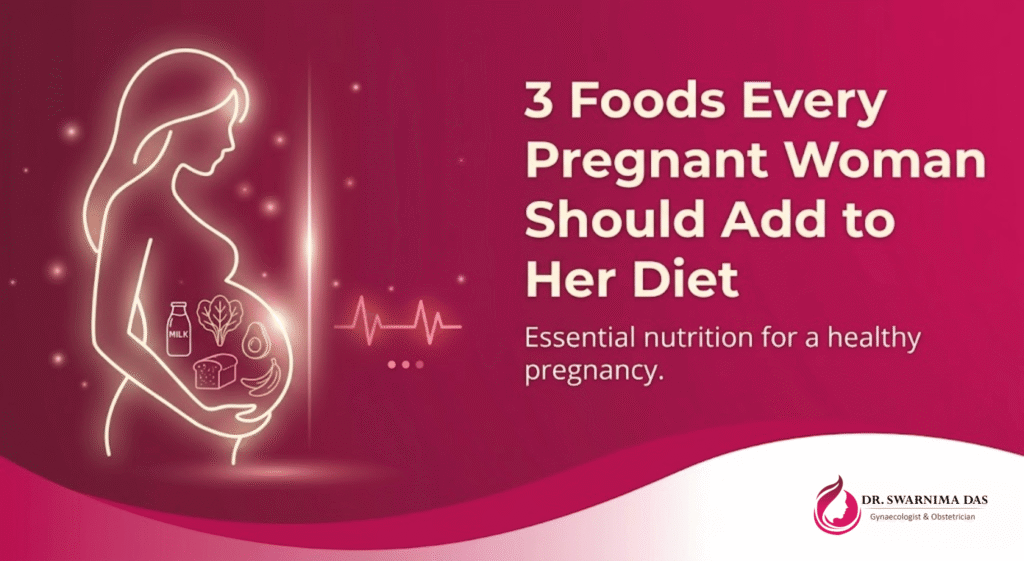
3 Foods Every Pregnant Woman Should Add to Her Diet
Instead of following a complicated diet, focusing on a few essential foods daily can make a difference.
1. Green Leafy Vegetables (Spinach, Methi, Saag)
Green vegetables are rich in iron, folic acid, and fiber.
Benefits
- Help prevent anemia
- Support fetal brain development
- Improve digestion
How to Include
- Add spinach to dal or sabzi
- Prepare vegetable soups
- Include in parathas or curries
2. Milk and Dairy Products
Milk, curd, and paneer are excellent sources of calcium and protein.
Benefits
- Strengthens baby’s bones and teeth
- Supports muscle development
- Helps maintain maternal bone health
How to Include
- 1–2 glasses of milk daily
- Add curd to meals
- Use paneer in dishes
3. Protein-Rich Foods (Lentils, Eggs, Nuts)
Protein is essential for the baby’s growth and tissue development.
Benefits
- Supports fetal growth
- Helps repair body tissues
- Maintains energy levels
Examples
- Dal, chickpeas, and beans
- Eggs (if non-vegetarian)
- Nuts like almonds and walnuts
How These Foods Support Baby Development
Each of these foods contributes to specific aspects of fetal development:
- Iron-rich foods improve oxygen supply to the baby
- Calcium-rich foods support bone formation
- Protein-rich foods help build organs and tissues
A combination of these ensures balanced growth.
Tips to Include These Foods in Daily Diet
Making small adjustments can improve your nutrition.
- Eat small, frequent meals
- Combine different food groups in each meal
- Stay hydrated throughout the day
- Avoid skipping meals
If you experience nausea, try lighter meals like soups or soft foods.
Foods to Avoid During Pregnancy
Certain foods may increase the risk of infections or complications.
Limit or Avoid
- Unpasteurized dairy products
- Raw or undercooked foods
- Excess caffeine
- Packaged and highly processed foods
Maintaining food safety is as important as choosing the right diet.
When to Consult a Doctor for Diet Advice
You should seek professional guidance if:
- You have anemia or nutritional deficiencies
- You are experiencing excessive nausea or vomiting
- You have gestational diabetes or high-risk pregnancy
- You are unsure about your diet
Pregnant women in Patia, Kanan Vihar, Chandrasekharpur, and nearby areas of Bhubaneswar can consult experienced obstetric specialists for personalized diet guidance and safe pregnancy care.
Risks and Limitations
- Dietary needs vary for each individual
- Some women may require supplements in addition to diet
- Certain medical conditions need specialized diet plans
Always follow medical advice for your specific condition.
Medical Disclaimer
This article is for educational purposes only and does not replace professional medical advice. Consult a qualified healthcare provider for personalized dietary recommendations.