


Many women believe that having regular periods and fertility always go hand in hand. While a predictable menstrual cycle is often a positive sign of reproductive health, it does not guarantee that pregnancy will happen easily. Some women have regular menstrual cycles yet still experience difficulty conceiving due to conditions affecting ovulation, the fallopian tubes, the uterus, egg quality, or even male fertility factors.
If you have been wondering, “Do regular periods mean you are fertile?” or “Why am I not getting pregnant despite regular cycles?”, you’re not alone. These are among the most common questions gynecologists hear from couples trying to conceive.
Understanding how fertility works can help you recognize when it may be time for further evaluation. Many fertility-related conditions develop silently and may not cause noticeable changes in menstrual cycles. Early medical assessment can help identify underlying causes and guide appropriate management based on your individual health needs.
Do Regular Periods Always Mean You Are Fertile?
The short answer is no.
Regular menstrual cycles often suggest that hormonal communication between the brain and ovaries is functioning reasonably well. However, fertility depends on much more than having a monthly period.
Successful pregnancy requires several important steps to occur correctly:
- Healthy egg development
- Timely ovulation
- Open and functioning fallopian tubes
- Healthy sperm reaching the egg
- Successful fertilization
- A healthy uterine lining for implantation
- Proper embryo development
A problem at any of these stages can make conception difficult—even if menstrual periods remain perfectly regular.
Why This Misconception Is So Common
Many people associate regular periods with normal ovulation because menstrual bleeding usually follows ovulation. While this is often true, it is not always the case.
Some women may:
- Ovulate inconsistently despite regular bleeding
- Experience hormonal disorders affecting egg quality
- Have structural reproductive problems
- Develop conditions that do not interfere with menstrual timing
This is why doctors consider menstrual regularity only one piece of the fertility assessment.
Regular Periods Suggest—but Do Not Guarantee—Ovulation
A regular menstrual cycle increases the likelihood that ovulation is occurring, but it cannot confirm:
- Whether an egg is released every cycle
- Whether the egg is healthy
- Whether fertilization can occur
- Whether implantation is successful
Additional evaluation may be needed when pregnancy does not occur despite regular cycles.
How Fertility Actually Works
Understanding fertility can help explain why pregnancy sometimes takes longer than expected.
Conception depends on a coordinated sequence of biological events involving both partners.
Step 1: Egg Development
Each menstrual cycle, hormones stimulate ovarian follicles to mature. Usually, one follicle becomes dominant and prepares to release an egg.
Healthy hormone levels are essential during this stage.
Step 2: Ovulation
Around the middle of the cycle, the mature egg is released from the ovary.
If ovulation does not occur—or occurs irregularly—pregnancy becomes difficult.
However, ovulation alone is not enough to ensure fertility.
Step 3: Fertilization
After ovulation:
- Sperm travel through the cervix and uterus.
- Fertilization normally occurs inside the fallopian tube.
- Healthy sperm and a healthy egg are both necessary.
Problems affecting sperm count, movement, or structure may prevent fertilization even when the woman has regular periods.
Step 4: Implantation
Once fertilization occurs, the embryo travels into the uterus and implants within the uterine lining.
Conditions affecting the uterus or endometrium can interfere with implantation despite normal ovulation.
Fertility Depends on Both Partners
Pregnancy is a shared process.
Medical studies consistently show that infertility may involve:
- Female factors
- Male factors
- Both partners
- Sometimes no identifiable cause despite thorough testing (unexplained infertility)
This is why fertility specialists often recommend evaluating both partners rather than focusing only on the woman.
Why Pregnancy May Not Happen Despite Regular Periods
Many couples become anxious when pregnancy does not occur after several months of trying, especially when menstrual cycles appear completely normal.
The reality is that regular menstrual cycles but difficulty conceiving is more common than many people realize.
Several medical conditions may affect fertility without changing menstrual timing.
Ovulation May Not Always Be Normal
Although regular cycles often indicate ovulation, they do not prove that:
- An egg is released every month
- Ovulation occurs at the optimal time
- The egg is mature enough for fertilization
Doctors may recommend ovulation monitoring if pregnancy is delayed.
Fallopian Tubes May Be Blocked
The fallopian tubes allow sperm and egg to meet.
If one or both tubes become blocked because of:
- Previous pelvic infections
- Endometriosis
- Pelvic surgery
- Inflammation
fertilization may never occur, even when periods remain completely regular.
Many women with tubal blockage continue having normal monthly cycles because menstruation does not depend on open tubes.
The Uterus May Affect Implantation
Even after fertilization, pregnancy requires successful implantation.
Certain uterine conditions can reduce implantation success, including:
- Uterine fibroids
- Endometrial polyps
- Congenital uterine abnormalities
- Intrauterine scar tissue
These conditions may not affect menstrual regularity.
Egg Quality Changes With Age
Women are born with a limited number of eggs.
As age increases:
- Egg quantity gradually decreases.
- Egg quality also declines.
- Chromosomal abnormalities become more common.
This explains why conception may become more difficult despite maintaining regular menstrual cycles.
Age-related fertility decline becomes more noticeable after the mid-30s, although individual experiences vary.
Common Causes of Infertility With Regular Cycles
Many underlying conditions can contribute to fertility problems despite regular periods. Some are hormonal, while others involve the reproductive organs or overall health.
Endometriosis
Endometriosis occurs when tissue similar to the uterine lining grows outside the uterus.
It may affect:
- Ovaries
- Fallopian tubes
- Pelvic tissues
- Surrounding organs
Although many women experience painful periods, others have very few symptoms and continue having regular menstrual cycles.
Endometriosis can contribute to infertility by:
- Causing pelvic inflammation
- Distorting pelvic anatomy
- Affecting egg quality
- Interfering with fertilization
- Reducing implantation success
Because symptoms vary widely, endometriosis may remain undiagnosed until fertility evaluation begins.
Polycystic Ovary Syndrome (PCOS)
Many people assume PCOS always causes irregular periods.
However, some women with mild PCOS continue having apparently regular cycles while still experiencing:
- Inconsistent ovulation
- Hormonal imbalance
- Reduced egg quality
- Difficulty conceiving
Doctors evaluate PCOS using medical history, physical examination, ultrasound findings, and hormone testing rather than menstrual timing alone.
Diminished Ovarian Reserve
Diminished ovarian reserve means the ovaries contain fewer eggs than expected for a woman’s age.
Women may continue having:
- Predictable menstrual cycles
- Normal cycle length
- Monthly bleeding
Yet fertility may gradually decline because fewer healthy eggs remain available for fertilization.
Hormonal testing and ovarian reserve assessment help doctors estimate ovarian function, particularly for women who have been trying to conceive without success.
Common Causes of Infertility With Regular Cycles (Continued)
Thyroid Disorders
The thyroid gland plays an important role in regulating hormones involved in reproduction. Even mild thyroid dysfunction can affect fertility without causing noticeable changes in menstrual regularity.
Both an underactive thyroid (hypothyroidism) and an overactive thyroid (hyperthyroidism) may contribute to:
- Difficulty conceiving
- Problems with ovulation
- Early pregnancy loss
- Hormonal imbalance
Some women have no obvious symptoms beyond delayed pregnancy, which is why thyroid function tests are often included in a fertility evaluation.
Hyperprolactinemia
Prolactin is a hormone primarily responsible for breast milk production after childbirth. Elevated prolactin levels outside pregnancy and breastfeeding can interfere with normal reproductive hormone function.
Although high prolactin commonly causes irregular periods, some women continue to experience regular menstrual cycles while ovulation is affected.
Depending on the underlying cause, treatment may help restore normal hormonal balance.
Uterine Fibroids and Endometrial Polyps
Fibroids are non-cancerous growths in the uterus, while endometrial polyps are small growths arising from the uterine lining.
Not all fibroids or polyps affect fertility. However, certain types—particularly those that distort the uterine cavity—may:
- Reduce implantation rates
- Increase the risk of miscarriage
- Interfere with embryo development
Many women with these conditions continue having regular periods, making imaging studies such as pelvic ultrasound an important part of fertility assessment.
Chronic Pelvic Infections
Previous pelvic inflammatory disease (PID), untreated sexually transmitted infections, or severe pelvic infections may damage the reproductive organs.
Potential complications include:
- Blocked fallopian tubes
- Pelvic adhesions (scar tissue)
- Chronic pelvic inflammation
Even after the infection has resolved, fertility may be affected while menstrual cycles remain unchanged.
Unexplained Infertility
Sometimes, all fertility investigations appear normal, yet pregnancy does not occur.
This is known as unexplained infertility.
It does not mean that nothing is wrong. Instead, it means current testing has not identified a specific cause. Factors such as subtle egg or sperm abnormalities, fertilization problems, or implantation issues may not always be detectable with routine investigations.
Unexplained infertility is relatively common and can often be managed with individualized treatment strategies depending on the couple’s age, medical history, and duration of infertility.
Male Fertility: An Important Part of the Evaluation
One of the biggest misconceptions about infertility is that it is primarily a woman’s issue.
In reality, male fertility plays an equally important role in conception.
Medical evidence suggests that male factors contribute to infertility in a significant proportion of couples. This is why fertility specialists recommend evaluating both partners, even when the woman has regular menstrual cycles.
Common Male Fertility Factors
Male fertility may be affected by:
- Low sperm count
- Poor sperm motility (movement)
- Abnormal sperm shape (morphology)
- Hormonal disorders
- Varicocele (enlarged veins around the testicle)
- Genetic conditions
- Previous infections or surgeries
In many cases, men experience no symptoms, making semen analysis an essential part of fertility evaluation.
Lifestyle Factors That Can Affect Male Fertility
Certain lifestyle habits may also influence sperm health, including:
- Smoking
- Excessive alcohol intake
- Obesity
- Chronic stress
- Poor sleep
- Exposure to excessive heat or certain environmental toxins
Addressing these factors may improve overall reproductive health, although outcomes vary between individuals.
Tests Your Gynecologist May Recommend
A fertility assessment aims to identify possible causes of delayed conception while avoiding unnecessary investigations.
The exact tests depend on age, symptoms, medical history, and how long pregnancy has been attempted.
Medical History and Physical Examination
Your gynecologist will begin by discussing:
- Menstrual history
- Previous pregnancies or miscarriages
- Medical conditions
- Past surgeries
- Medications
- Family history
- Lifestyle factors
A physical examination may also be performed to identify any obvious reproductive health concerns.
Ovulation Assessment
Although regular cycles often suggest ovulation, additional testing may confirm whether ovulation is occurring consistently.
This may include:
- Ovulation tracking
- Hormone blood tests
- Ultrasound monitoring in selected cases
Hormone Testing
Blood tests may be recommended to evaluate reproductive hormone balance.
Depending on individual circumstances, these may include assessment of:
- Ovarian reserve
- Thyroid function
- Prolactin levels
- Other reproductive hormones
These tests help doctors better understand ovarian function and hormonal health.
Pelvic Ultrasound
Ultrasound helps evaluate:
- Ovaries
- Uterus
- Endometrial lining
- Fibroids
- Ovarian cysts
- Features suggestive of PCOS
- Structural abnormalities
It is a routine, non-invasive investigation used during fertility assessment.
Fallopian Tube Assessment
Because fertilization usually occurs inside the fallopian tubes, doctors may recommend tests to determine whether the tubes are open.
Depending on the clinical situation, this may involve imaging procedures that assess tubal patency and the uterine cavity.
Semen Analysis
Since male fertility is equally important, semen analysis is usually recommended early during fertility evaluation.
The test assesses:
- Sperm count
- Motility
- Morphology
- Semen volume
Identifying male-factor infertility early helps guide appropriate management for the couple.
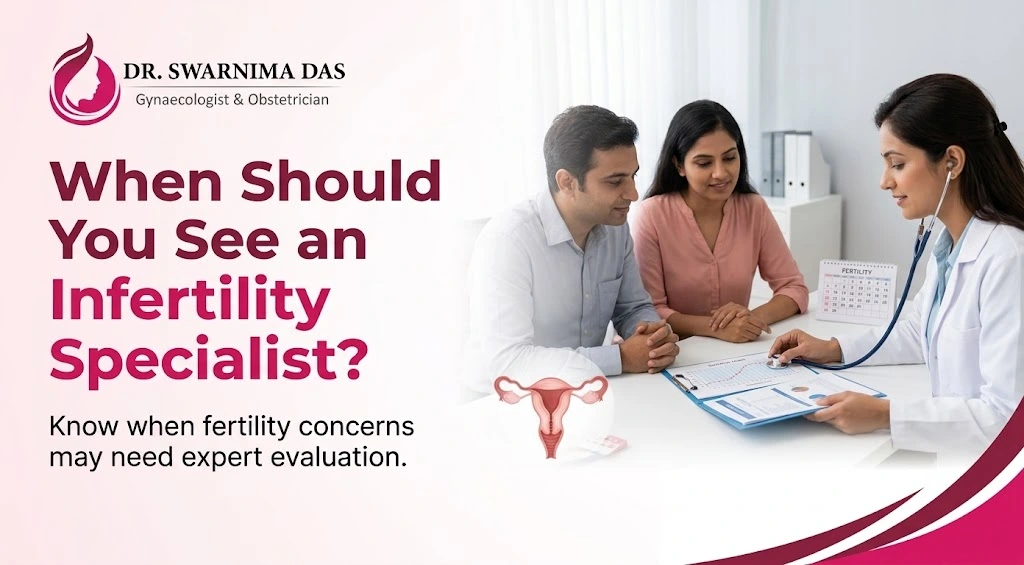
When Should Couples Seek Fertility Advice?
The appropriate time to seek evaluation depends on age and individual health factors.
General recommendations include:
If the woman is younger than 35 years
Consider consulting a gynecologist if pregnancy has not occurred after 12 months of regular, unprotected intercourse.
If the woman is 35 years or older
Consultation is generally recommended after 6 months of trying because fertility naturally declines with age.
Seek Earlier Medical Advice If You Have:
- Very painful periods
- Known endometriosis
- Previous pelvic infections
- History of ectopic pregnancy
- Recurrent miscarriage
- Previous ovarian surgery
- Irregular ovulation
- Chemotherapy or radiation history
- Known male fertility concerns
Early evaluation allows appropriate investigation and personalized guidance based on your medical history.
Can Lifestyle Changes Improve Fertility?
Healthy lifestyle habits support overall reproductive health, although they cannot correct every medical cause of infertility.
Some evidence-based recommendations include:
- Maintain a healthy body weight.
- Eat a balanced diet rich in fruits, vegetables, whole grains, and lean protein.
- Exercise regularly without excessive overtraining.
- Stop smoking.
- Limit alcohol consumption.
- Manage stress using healthy coping strategies.
- Get adequate sleep.
- Take folic acid before pregnancy if advised by your healthcare provider.
- Manage chronic medical conditions such as diabetes or thyroid disease.
Lifestyle changes are most effective when combined with appropriate medical evaluation where necessary.
Risks and Limitations
While regular periods often indicate normal hormonal function, they cannot confirm fertility on their own.
Keep in mind:
- Regular menstruation does not always confirm healthy ovulation.
- Fertility depends on both female and male reproductive health.
- Home ovulation kits cannot identify every fertility problem.
- Online information cannot replace individualized medical evaluation.
- Some fertility conditions have no obvious symptoms.
If conception is taking longer than expected, a comprehensive assessment by a qualified gynecologist can help identify possible causes and discuss appropriate next steps.
Conclusion
Having regular menstrual cycles is generally reassuring, but it should not be considered proof that fertility is normal. Pregnancy depends on many interconnected factors, including healthy ovulation, open fallopian tubes, good egg quality, normal uterine function, and healthy sperm.
If you are experiencing regular periods but not getting pregnant, remember that many causes of infertility can exist without changing your menstrual cycle. Evaluating both partners, understanding possible underlying conditions, and seeking evidence-based medical advice when appropriate can help provide clarity and guide further care.
Couples planning pregnancy in Patia, Kanan Vihar, Chandrasekharpur, and nearby areas of Bhubaneswar can consult experienced gynecologists for fertility assessment, ovulation evaluation, hormonal testing, preconception counseling, and personalized pregnancy planning based on their individual medical history and reproductive goals.
Medical Disclaimer
This article is intended for general educational purposes only and should not be considered a substitute for professional medical advice, diagnosis, or treatment. Fertility concerns vary from person to person, and only a qualified healthcare professional can recommend appropriate investigations and management based on your individual health condition. If you have concerns about fertility or pregnancy planning, consult a registered gynecologist or fertility specialist for personalized evaluation.
Frequently Asked Questions
1. Do regular periods always mean you are fertile?
No. Regular periods often suggest that ovulation is occurring, but they do not guarantee fertility. Pregnancy also depends on healthy eggs, open fallopian tubes, a healthy uterus, and normal sperm quality. Problems affecting any of these can make conception difficult despite regular menstrual cycles.
2. Can women with regular periods still have infertility?
Yes. Conditions such as endometriosis, blocked fallopian tubes, diminished ovarian reserve, uterine abnormalities, or male-factor infertility can prevent pregnancy even when menstrual cycles are regular.
3. Why am I not getting pregnant despite having regular cycles?
Possible reasons include:
- Ovulation problems
- Poor egg quality
- Blocked fallopian tubes
- Endometriosis
- Uterine fibroids or polyps
- Hormonal disorders
- Male infertility
- Unexplained infertility
A comprehensive fertility evaluation can help determine the underlying cause.
4. Should both partners get tested for infertility?
Yes. Fertility is a shared responsibility. Doctors typically recommend evaluating both partners because male factors contribute to infertility in a significant proportion of couples.
5. What fertility tests are commonly recommended?
Depending on your medical history, your gynecologist may recommend:
- Hormone blood tests
- Ovulation assessment
- Pelvic ultrasound
- Ovarian reserve testing
- Fallopian tube patency tests
- Semen analysis
- Additional investigations if clinically indicated
6. Can endometriosis cause infertility even with regular periods?
Yes. Many women with endometriosis continue having regular menstrual cycles. However, the condition may affect egg quality, pelvic anatomy, fallopian tubes, and implantation, making conception more difficult.
7. Can blocked fallopian tubes occur if periods are regular?
Yes. Menstrual bleeding usually continues normally even if one or both fallopian tubes are blocked. Tubal blockage often has no obvious symptoms until fertility evaluation.
8. Can PCOS occur with regular periods?
Yes. Some women with mild PCOS continue having apparently regular cycles while experiencing hormonal imbalance or inconsistent ovulation.
9. Can male infertility prevent pregnancy if my periods are regular?
Yes. Healthy sperm are essential for conception. Male fertility issues such as low sperm count or poor sperm motility can delay pregnancy even when the female partner has regular cycles.
10. When should couples consult a fertility specialist?
General recommendations include:
- After 12 months of regular unprotected intercourse if the woman is younger than 35 years.
- After 6 months if the woman is 35 years or older.
- Earlier if there are known reproductive health concerns or previous fertility-related conditions.
11. Can thyroid disorders affect fertility?
Yes. Both hypothyroidism and hyperthyroidism can interfere with reproductive hormones, ovulation, and conception even if menstrual cycles appear regular.
12. What is unexplained infertility?
Unexplained infertility is diagnosed when routine fertility investigations for both partners appear normal, yet pregnancy does not occur. Additional evaluation and individualized management may still help improve the chances of conception.
13. Can age affect fertility despite regular periods?
Yes. Egg quality and ovarian reserve naturally decline with age, especially after the mid-30s. Regular menstrual cycles do not prevent this age-related decline in fertility.
14. Can lifestyle changes improve fertility?
Healthy lifestyle habits such as maintaining a healthy weight, avoiding smoking, limiting alcohol, exercising regularly, managing stress, and eating a balanced diet support reproductive health. However, lifestyle changes alone may not treat all causes of infertility.
15. Where can couples seek fertility evaluation in Bhubaneswar?
Couples planning pregnancy in Patia, Kanan Vihar, Chandrasekharpur, and nearby areas of Bhubaneswar can consult experienced gynecologists for fertility assessment, ovulation evaluation, hormonal testing, pregnancy planning, and reproductive health guidance tailored to their individual needs.