

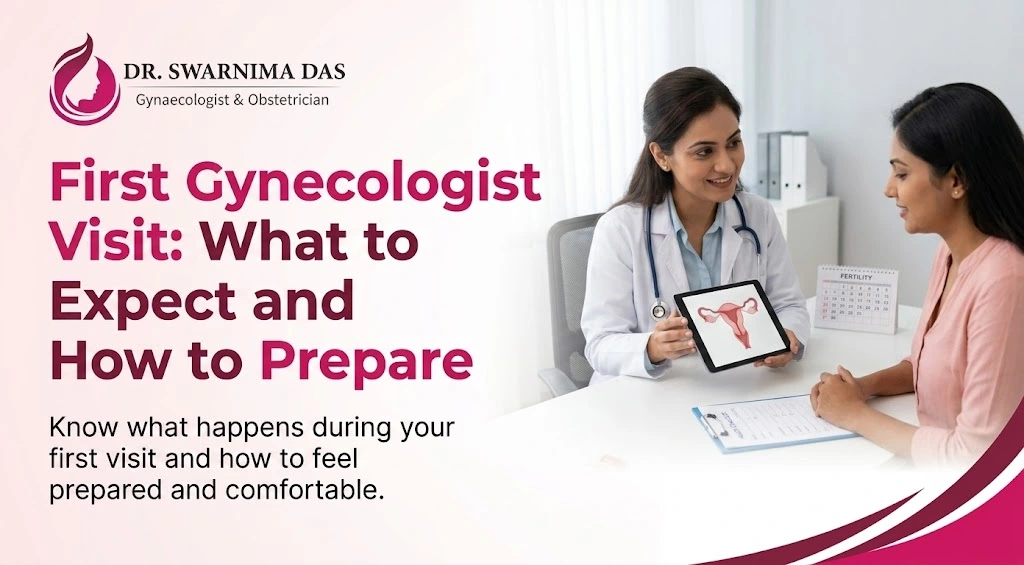
A first gynecologist visit can feel unfamiliar, particularly if you are unsure what the doctor will ask or whether you will need an examination. In reality, a first appointment often begins with a conversation about your health, menstrual cycle, symptoms, medications and reproductive concerns.
A pelvic or other examination is not automatically required for every first visit. Whether an examination or testing is appropriate depends on your age, symptoms, medical history and reason for the appointment.
What Happens During Your First Gynecologist Visit?
The first appointment generally starts with a discussion about your health and the reason you decided to consult a gynecologist.
Your doctor may ask about:
- Your menstrual cycle and period history
- Painful or heavy periods
- Irregular or missed periods
- Vaginal discharge or itching
- Pelvic pain
- Sexual and reproductive health
- Previous pregnancies or procedures
- Current medicines and supplements
- Existing medical conditions
- Fertility or pregnancy-planning concerns
You should feel comfortable discussing personal health concerns honestly. These conversations help the doctor understand whether you need an examination, investigation, treatment or simply preventive guidance.
How to Prepare Before Your Appointment
You usually do not need complicated preparation for a routine gynecology consultation.
Before your appointment, consider writing down:
Your symptoms
Note when your symptoms started, how often they occur and whether anything makes them better or worse.
For menstrual concerns, recording the dates of your recent periods can be particularly useful.
Your medicines
Prepare a list of prescription medicines, over-the-counter medicines, supplements and relevant herbal products you use.
Do not stop a prescribed medicine simply because you are visiting a gynecologist. Discuss it with the doctor first.
Your medical history
Bring details of previous surgeries, significant illnesses, pregnancies, miscarriages, allergies and relevant gynecological treatment.
Previous medical reports can also be useful when they relate to your current concern.
What Should You Bring to a Gynecologist Appointment?
Consider carrying:
- Previous relevant medical reports
- Current medication list
- Previous ultrasound or laboratory reports, if relevant
- Menstrual dates or a period-tracking record
- List of questions you want to ask
- Details of previous gynecological procedures, if applicable
The supplied research specifically identifies symptoms, medicines, previous reports and medical history as useful information to prepare before the consultation.
What Questions Will a Gynecologist Ask?
The questions depend on why you are visiting.
For example, if you have irregular periods, the doctor may ask how frequently your periods occur and whether your cycle has changed recently.
If you have pelvic pain, the discussion may include where the pain occurs, how severe it is and whether it is related to your menstrual cycle.
You may also be asked questions about sexual or reproductive health. These questions are part of medical assessment and should be approached without embarrassment.
Will You Need a Gynecological Examination?
Not necessarily.
A pelvic examination should be performed when medically indicated by your history, symptoms or clinical situation rather than automatically at every appointment. The supplied research highlights this as an important patient education point based on ACOG guidance.
If an examination is recommended, your doctor should explain what is being done and why.
You can ask questions before the examination and communicate if you feel uncomfortable.
What Tests May Be Recommended?
Tests are not the same for every woman.
Depending on your symptoms and medical history, a gynecologist may recommend investigations such as blood tests, urine testing, ultrasound or other screening or diagnostic tests when clinically appropriate.
For example, someone consulting for irregular periods may need a different evaluation from someone seeking advice about contraception or pregnancy planning.
The important point is that there is no universal test list for every first gynecology visit. The supplied research specifically advises against suggesting that every patient needs the same examinations or tests.
Questions You Can Ask Your Gynecologist
You do not need to wait for the doctor to ask everything.
Useful questions may include:
- What could be causing my symptoms?
- Do I need an examination?
- Do I need any tests?
- What do my symptoms mean?
- Are my periods within a typical range?
- Could my medicines affect my reproductive health?
- When should I return for follow-up?
- Are there preventive screenings I should consider?
Writing questions down beforehand can help if you feel nervous during the appointment.
How to Feel More Comfortable During Your First Visit
Feeling nervous or embarrassed is common. You can make the experience easier by choosing a healthcare professional with whom you feel comfortable communicating.
You can also:
- Tell the doctor if you are anxious about an examination.
- Ask for an explanation before any examination or procedure.
- Discuss private concerns directly.
- Ask questions if you do not understand a medical term.
- Ask whether a support person can accompany you, where permitted.
- Request a female gynecologist if that is your preference and the service is available.
Privacy, consent and respectful communication are important parts of patient-centered gynecological care. The supplied research identifies these concerns as key areas that many competing articles fail to address.
Can You Visit a Gynecologist During Your Period?
In many situations, yes. Having your period does not automatically mean you must cancel a gynecology appointment.
However, if the appointment is specifically for certain screening tests or procedures, menstrual bleeding may affect whether that particular test should be performed. It is reasonable to contact the clinic beforehand if you are unsure.
When Should You Visit a Gynecologist?
You do not have to wait until a problem becomes severe.
A gynecology consultation may be appropriate if you have:
- Persistent or unusually painful periods
- Irregular or missed periods
- Abnormal vaginal bleeding
- Unusual vaginal discharge
- Persistent pelvic pain
- Pain during intercourse
- Fertility concerns
- Questions about contraception or reproductive health
- Pregnancy-planning concerns
A gynecologist can also provide preventive women’s healthcare depending on your age, history and individual needs.Risks and Limitations
A gynecology consultation cannot provide a diagnosis based only on an online article.
The appropriate examination or tests depend on individual circumstances. Symptoms that appear similar can have different causes, so treatment should not be started based solely on information found online.
If symptoms are severe, sudden or concerning, seek appropriate medical care rather than relying on self-assessment.
Conclusion
Your first gynecologist visit does not have to be intimidating. In many cases, the appointment begins with a conversation about your health, menstrual cycle, symptoms, medications and concerns. An examination or test may be recommended only when it is clinically appropriate.
Preparing your questions, menstrual history, medication list and relevant medical reports can help you make better use of the appointment. You can also tell your gynecologist if you feel anxious or uncomfortable and ask for an explanation before any examination.
Medical Disclaimer: This article is intended for general educational purposes and does not replace a personal medical consultation, diagnosis or treatment plan.
FAQs
1. What happens during your first gynecologist visit?
The appointment commonly includes a discussion about your medical history, menstrual cycle, symptoms, medicines and reproductive health. An examination or testing may be recommended when clinically appropriate.
2. How should I prepare for my first gynecologist appointment?
Write down your symptoms, menstrual dates, medicines and important medical history. Bring relevant previous reports and prepare questions you want to discuss.
3. Do I need a pelvic examination during my first visit?
Not necessarily. A pelvic examination is generally based on the patient’s medical history and symptoms rather than being automatically performed at every visit.
4. What should I wear to my first gynecologist visit?
Wear clothing that is comfortable and easy to change if an examination is required. There is generally no special outfit required for a routine consultation.
5. Can I see a gynecologist while on my period?
In many cases, yes. However, if you are scheduled for a particular screening test or procedure, menstrual bleeding may affect whether it can be performed that day.
6. Should I bring previous medical reports?
Yes, relevant previous reports can help your gynecologist understand your medical history and avoid unnecessary repetition of investigations.
7. Do I need to shave before seeing a gynecologist?
No. There is generally no medical requirement to shave before a gynecology appointment.
8. Can I ask a gynecologist about sexual health?
Yes. Sexual and reproductive health concerns are appropriate topics for a gynecology consultation and should be discussed openly with your healthcare professional.
9. Can I request a female gynecologist?
You can ask the clinic whether a female gynecologist is available. The supplied research identifies this as an important patient preference for some women.
10. What tests might be done during a gynecology visit?
Testing depends on your symptoms, medical history and reason for consultation. There is no single set of tests required for every first gynecology visit.