


Being told you need a laparoscopy can bring up a lot of questions. Will it hurt? How soon can I get back to normal life? What should I watch out for at home? Knowing what laparoscopic surgery recovery usually looks like can make the weeks after your procedure feel far less stressful.
This guide walks you through the first few weeks, week by week, so you know what is normal and what needs a call to your doctor.
Why Recovery Is Usually Quicker After Laparoscopy?
In laparoscopy, the surgeon works through a few very small cuts instead of one large opening. A camera and fine instruments are used to see and operate inside the abdomen or pelvis.
Because the muscles and skin are disturbed much less, many women have less pain and a shorter hospital stay than with open surgery. At Dr. Swarnima Das’s clinic, the laparoscopy services include both diagnostic and treatment procedures, and recovery depends a lot on which one you have.
Does Recovery Depend on the Type of Procedure?
Yes. A procedure done only to look inside usually needs less healing time than one where tissue is removed or repaired.
- After a diagnostic laparoscopy, which is done to find the cause of a problem such as pelvic pain, recovery is often shorter because nothing major is treated during the procedure.
- After an operative laparoscopy, where a cyst, adhesion or other problem is treated, your body usually needs more time to heal.
- Procedures done through the cervix, such as hysteroscopy services, involve no cuts on the abdomen, and many women feel better quickly.
Your doctor will tell you what to expect for your own procedure, because the timeline can differ from one woman to another.
The First 24 to 48 Hours
This is the stage when your body is coming out of anaesthesia, and you will be watched closely by the care team. You may feel:
- Sleepy, weak or slightly dizzy
- Mild nausea
- Soreness around the small cuts
- Bloating or a feeling of fullness in the abdomen
- Pain in one or both shoulders, caused by the gas used to expand the abdomen during surgery
None of this is unusual, and these symptoms generally ease over a day or two. Walking a few steps with support, as your doctor allows, helps the gas pass and keeps your blood moving.
The First Week
Most women notice small improvements every day. Tiredness and mild soreness can continue, and bloating usually fades slowly. Light, regular movement around the house is better than staying in bed all day, but you should avoid lifting heavy things or doing anything that strains your tummy.
Some things that help in this week:
- Take the medicines exactly as prescribed
- Rest when you feel tired, without feeling guilty about it
- Eat light meals and drink enough water
- Keep the cuts clean and dry as you were advised
Light spotting or a small amount of vaginal discharge can happen after some gynecological procedures. Ask your doctor what level is expected in your case.
Weeks Two to Four
By now, many women feel stronger and more like themselves. You may be able to walk for longer and manage most household work, and some women return to desk work during this period, as advised by their doctor.
Even if you feel fine, the tissues inside are still healing. It is wise to increase activity slowly, and to avoid heavy exercise, strenuous lifting and anything your doctor has asked you to hold off on. If the procedure treated something larger, such as fibroid and cyst management, your doctor may advise a longer period of rest.
Looking After Yourself at Home
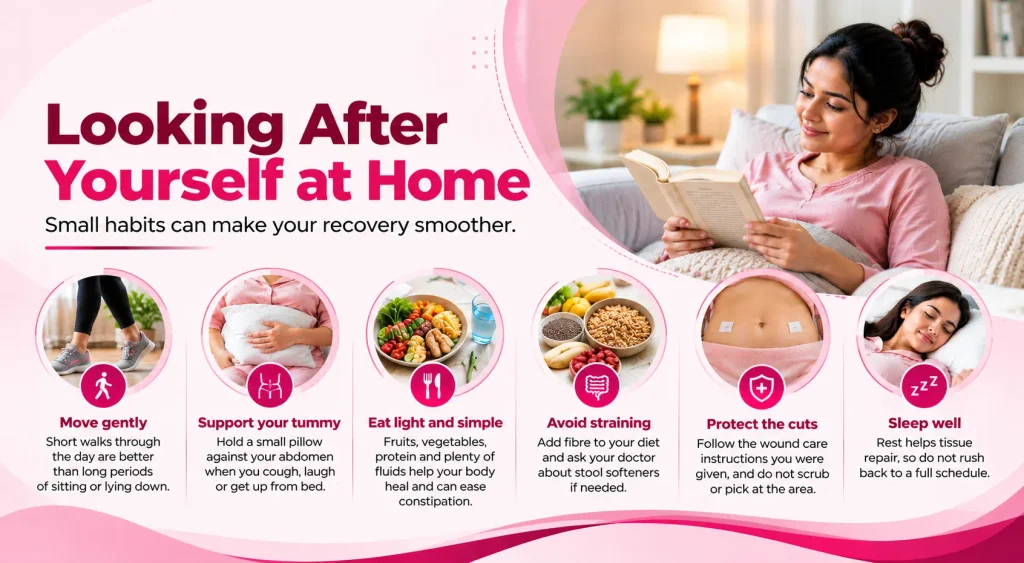
Small habits can make your recovery smoother:
- Move gently: Short walks through the day are better than long periods of sitting or lying down.
- Support your tummy: Hold a small pillow against your abdomen when you cough, laugh or get up from bed.
- Eat light and simple: Fruits, vegetables, protein and plenty of fluids help your body heal and can ease constipation.
- Avoid straining: Add fibre to your diet and ask your doctor about stool softeners if needed.
- Protect the cuts: Follow the wound care instructions you were given, and do not scrub or pick at the area.
- Sleep well: Rest helps tissue repair, so do not rush back to a full schedule.
Factors That Can Change How Fast You Recover
Not everyone heals at the same speed. Your recovery can be affected by:
- The type and length of the procedure
- Your age and general health
- Health conditions such as diabetes or high blood pressure
- Smoking
- Nutrition and sleep before and after surgery
- How closely you follow your doctor’s post-surgery instructions
Staying on top of regular check-ups and preventive care before any planned procedure can help your body be in better shape going into it.
Warning Signs: When to Call Your Doctor
Most discomfort after laparoscopy is a normal part of healing, but some signs need medical attention. Contact your doctor without delay if you notice:
- Fever or chills
- Pain that is getting worse instead of better
- Redness, swelling or discharge from any of the cuts
- Heavy vaginal bleeding
- Repeated vomiting
- Trouble breathing, chest pain or swelling and pain in one leg
- Difficulty passing urine
- Fainting or extreme weakness
Do not wait for your next scheduled visit if any of these appear. If you are not sure whether something is normal, it is always safer to call and ask.
Follow-Up Visits Matter
After your procedure, your doctor will usually review your recovery and explain what was found during surgery, along with any next steps. This is a good time to ask when you can start exercise, resume intimacy, go back to work or plan a pregnancy. If fertility is a concern, an infertility evaluation may be discussed depending on your findings.
For ongoing concerns after treatment, regular visits for general gynecology can help you stay on track.
Final Thoughts
Recovery after laparoscopy is usually smoother than most women expect, but it still needs patience. Rest, light movement, good food and close follow-up with your doctor all help your body heal at its own pace.
If you have questions about an upcoming procedure or your recovery, you can learn more about Dr. Swarnima Das and her approach to women’s health, or contact us to book a consultation. You can also read more helpful articles on the clinic blog.
Disclaimer: This article is for general awareness only and is not a substitute for professional medical advice, diagnosis or treatment. Recovery time and symptoms vary from person to person, and the advice of your treating doctor should always come first. Results are not guaranteed.
FAQs:-
Q1. How long does laparoscopic surgery recovery take?
It depends on the procedure. A diagnostic laparoscopy usually needs less healing time than an operative laparoscopy, where something is treated. Age, general health and the findings during surgery also matter, so your doctor will give you a timeline for your case.
Q2. What is normal after laparoscopic surgery?
Tiredness, mild soreness around the small cuts, bloating, light nausea and shoulder pain are common in the first few days. These usually ease gradually as you rest and move gently.
Q3. Why do I have shoulder pain after laparoscopy?
Gas is used to expand the abdomen so the surgeon can see clearly. Some of it can irritate the nerves under the diaphragm, which is felt as shoulder pain. It usually settles within a day or two, and short walks help the gas pass.
Q4. When can I go back to work after laparoscopy?
Many women return to desk work within a week or two, but this varies with the type of surgery and how you feel. Your doctor will advise you at the follow-up visit, which is also a good time to ask about exercise and intimacy.
Q5. What should I avoid during laparoscopic surgery recovery?
Avoid heavy lifting, intense exercise, straining during bowel movements and scrubbing or picking at the cuts until your doctor says it is safe. Good laparoscopic surgery recovery needs rest and a slow return to routine, even if you feel fine.
Q6. When should I call my doctor after laparoscopy?
Contact your doctor without delay if you have fever, worsening pain, heavy bleeding, repeated vomiting, redness or discharge from the cuts, trouble breathing, or swelling and pain in one leg. For ongoing concerns after treatment, you can contact us or book a visit for general gynecology care.