


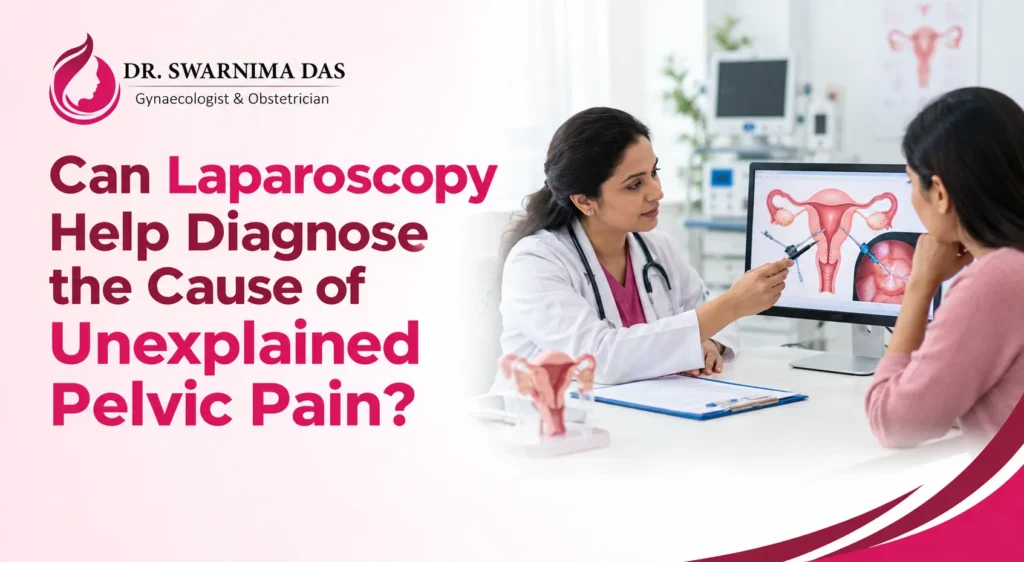
Pelvic pain is one of the most common reasons women visit a gynecologist. Sometimes the cause is easy to find. But many women go through ultrasounds, blood tests and medicines, and still have no clear answer. If this sounds familiar, you may be wondering whether laparoscopy for pelvic pain can help find what other tests have missed.
In many cases, it can. This article explains how it works, what it can detect and when it is recommended.
What Is Unexplained Pelvic Pain?
Pelvic pain is pain in the lower abdomen, below the belly button. When it lasts for six months or more, or keeps coming back without a clear cause on scans and tests, it is often called chronic or unexplained pelvic pain.
It can feel like a dull ache, sharp stabbing pain, pressure, cramping or a pulling sensation. It may be constant or may come and go with your periods, intercourse, urination or bowel movements. This pain should never be dismissed as “normal”, especially when it affects your daily life.
Why Do Ultrasound and Other Tests Sometimes Miss the Cause?
Ultrasound and blood tests are useful first steps, and they help rule out many problems. But some conditions are too small or too deep to show up clearly on imaging. Conditions like early endometriosis, thin scar tissue (adhesions) and small pelvic infections can look completely normal on a scan.
This is where direct visualisation becomes valuable. Instead of guessing from images, the doctor can look inside the pelvis with a camera.
What Is Diagnostic Laparoscopy?
Laparoscopy is a minimally invasive procedure done under anaesthesia. A thin tube with a tiny camera is inserted through a small cut near the navel, and the doctor gets a clear, magnified view of the uterus, ovaries, fallopian tubes and surrounding organs on a screen.
At Dr. Swarnima Das’s clinic, diagnostic laparoscopy is used to find the cause of pelvic pain when routine tests have not given a clear answer. You can also read about the full range of laparoscopy services offered at the clinic.
Which Conditions Can Laparoscopy Help Identify?
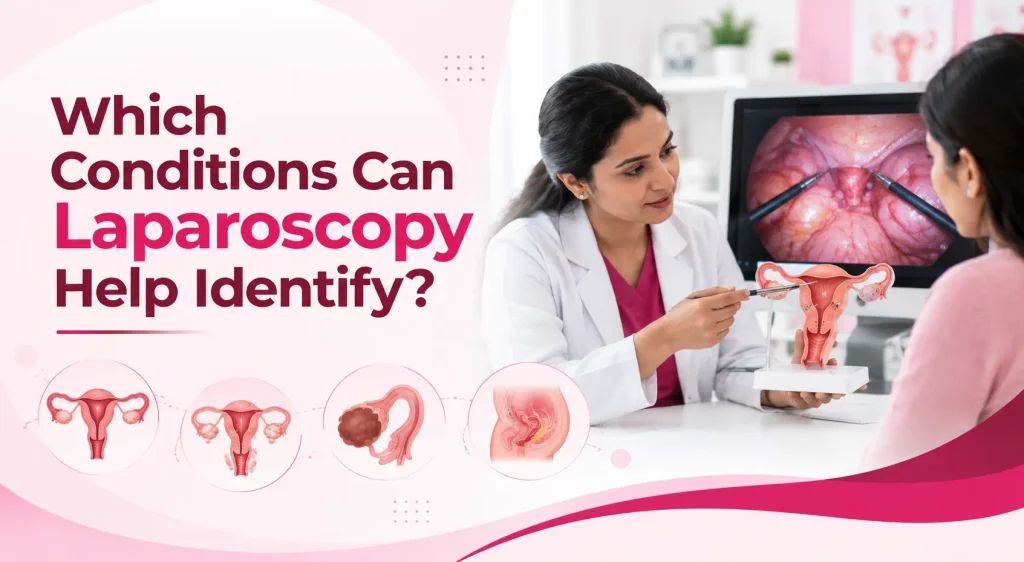
During the procedure, the doctor can look for several causes of pelvic pain, including:
- Endometriosis: Tissue similar to the uterine lining growing outside the uterus, often causing painful periods and pain during intercourse
- Pelvic adhesions: Bands of scar tissue that can form after surgery, infection or endometriosis and cause organs to stick together
- Ovarian cysts: Fluid-filled sacs on the ovaries that may cause pain or pressure
- Fibroids: Growths in or around the uterus. If you already know you have them, the clinic also offers fibroid and cyst management
- Pelvic inflammatory disease: Infection and inflammation of the reproductive organs
- Fallopian tube problems: Blockages or damage that can cause pain and may also affect fertility
Sometimes the camera shows a completely normal pelvis. This is also useful information, because it helps rule out structural causes and guides the next steps of care.
When Is Laparoscopy Recommended for Pelvic Pain?
A doctor may suggest laparoscopy when:
- Pain has lasted for several months without a clear cause
- Ultrasound, blood tests and other investigations are normal or unclear
- Medicines and simple treatments have not given enough relief
- Pain is severe and affects work, sleep or relationships
- Endometriosis, adhesions or pelvic infection is suspected
Laparoscopy is not the first test for everyone. Most women begin with a clinical examination and basic investigations, and the decision is made after that. A proper evaluation in general gynecology usually helps decide whether laparoscopy is needed.
What Happens During and After the Procedure?
The procedure is usually done under general anaesthesia and takes a short time. Because the cuts are very small, most women recover faster than they would after traditional open surgery. They often go home within a day, though this depends on each person’s condition.
You may feel mild soreness, shoulder discomfort from the gas used during the procedure, or slight bloating for a few days. These usually settle with rest and the medicines prescribed by your doctor. Your doctor will explain the preparation, recovery and follow-up in detail before the procedure.
Can Diagnosis and Treatment Happen Together?
In many cases, yes. If a problem such as an adhesion, a cyst or endometriosis is seen during the procedure, the doctor may be able to treat it in the same sitting. This is called operative laparoscopy. Whether this is possible depends on what is found and on what was discussed and consented to beforehand.
If the concern is mainly inside the uterus, such as abnormal bleeding along with pain, hysteroscopy services may be advised instead of, or along with, laparoscopy.
Pelvic Pain and Fertility
Some causes of pelvic pain, like endometriosis, adhesions and tubal problems, can also make it harder to conceive. If you have pelvic pain and are also trying to get pregnant, laparoscopy may give useful answers for both concerns. You can learn more about infertility evaluation, and about advanced infertility support if further care is needed.
Warning Signs You Should Not Ignore
See a gynecologist soon if you have:
- Pelvic pain that keeps returning or is getting worse
- Very painful or heavy periods
- Pain during intercourse
- Pain with urination or bowel movements
- Fever along with lower abdominal pain
- Sudden, severe pelvic pain, which needs urgent medical attention
Regular check-ups and preventive care also help catch problems early, before they become more painful or complicated.
Final Thoughts
Living with pain that nobody can explain is exhausting. Laparoscopy is not needed by every woman, but when other tests have not given answers, it can help doctors see what scans cannot and plan the right treatment.
If you have been struggling with pelvic pain, you can learn more about Dr. Swarnima Das and her approach to women’s health, or contact us to book a consultation.
Disclaimer: This article is for general awareness only and is not a substitute for professional medical advice, diagnosis or treatment. Whether laparoscopy is suitable for you can only be decided by a qualified doctor after a proper evaluation. Results and recovery vary from person to person.
FAQs:-
1. Can laparoscopy find the cause of pelvic pain when ultrasound is normal?
Yes, it often can. Ultrasound can miss small or deep problems like early endometriosis and thin adhesions. Diagnostic laparoscopy lets the doctor see the pelvic organs directly. Sometimes the pelvis looks normal, which also helps rule out structural causes.
2. Can endometriosis be diagnosed without laparoscopy?
Symptoms, a clinical examination and imaging can suggest endometriosis, but they cannot always confirm it. Laparoscopy lets the doctor see endometriosis directly, which is why it is often advised when the pain stays unexplained.
3. What is the difference between diagnostic and operative laparoscopy?
Diagnostic laparoscopy is done only to look inside and find the cause of a problem. Operative laparoscopy is used to treat a problem, such as removing an adhesion or a cyst. In some cases, both may be done in the same sitting if it was discussed and consented to beforehand.
4. Is laparoscopy for pelvic pain a painful procedure?
It is done under anaesthesia, so you do not feel pain during the procedure. Afterwards, mild soreness, shoulder discomfort from the gas used, or bloating is common and usually settles within a few days with prescribed medicines.
5. How long does recovery take after diagnostic laparoscopy?
Recovery is usually quicker than after open surgery because the cuts are very small. Many women go home within a day and return to light activity in a few days. Recovery varies from person to person, so follow your doctor’s advice.
6. Does everyone with pelvic pain need laparoscopy?
No. Most women start with a clinical examination and basic tests, and laparoscopy is considered only if the cause stays unclear or treatment has not helped. A proper evaluation in general gynecology helps decide the next step.