


You have had the pain for weeks or months. You went for an ultrasound, hoping for an answer, and the report says “normal.” Instead of relief, you may feel confused, or even doubted. If you are dealing with pelvic pain with normal ultrasound, please know that your pain is real and it deserves a proper explanation.
A normal scan does not mean there is nothing wrong. It only means that nothing obvious showed up on that particular test. This article explains why that happens and what steps usually follow.
Why Can Pelvic Pain Continue Even When the Ultrasound Is Normal?
Ultrasound is a very useful first test, but it has limits. It is good at showing structures like fibroids, large cysts and the thickness of the uterine lining. It is not always good at showing:
- Early or small patches of endometriosis
- Thin scar tissue (adhesions) between organs
- Mild or old pelvic infection
- Problems related to muscles, nerves or the bowel and bladder
- Pain that comes from how the organs function, not how they look
The result can also depend on the timing of the scan in your cycle and on the quality of the images. So a normal report is one piece of information, not the final answer.
What Could Be Causing Pelvic Pain When the Scan Looks Normal?
Your doctor will look at your full history before deciding. Some of the possible causes include:
- Endometriosis: Tissue similar to the uterine lining growing outside the uterus, often linked to painful periods and pain during intercourse
- Pelvic adhesions: Bands of scar tissue that can follow surgery, infection or endometriosis
- Pelvic inflammatory disease: Infection or inflammation of the reproductive organs
- Small ovarian cysts or ovulation-related pain: Pain that appears around the middle of the cycle
- Pelvic floor muscle tension: Tight or painful muscles in the pelvis
- Digestive causes: Constipation or irritable bowel problems
- Urinary causes: Repeated urinary infections or bladder irritation
Sometimes more than one cause is present together, which is why a careful evaluation matters.
Step 1: A Detailed Consultation and Examination
The first step is usually a thorough conversation and a physical examination. A proper visit for general gynecology often includes questions about:
- When the pain started and how long it lasts
- Whether it is linked to periods, intercourse, urination or bowel movements
- The nature of your periods, including flow and pain
- Past surgeries, infections or pregnancies
- What has helped or not helped so far
A simple pain diary can make this visit far more useful. For one to two months, note the date, the type of pain, its severity out of 10, and what you were doing when it started. Patterns that you cannot see day to day often become clear on paper.
Step 2: Further Tests Based on Your Symptoms
Depending on what your doctor finds, a few more tests may be suggested. These can include:
- A repeat or more focused pelvic scan, sometimes timed to a particular day of your cycle
- Urine tests and swabs to check for infection
- Blood tests, if needed
- Advanced imaging such as an MRI in selected cases
Not everyone needs all of these. The aim is to rule out common causes in a sensible order, and not to put you through unnecessary tests.
Step 3: Trying Treatment Based on the Likely Cause
If the picture points towards a likely cause, your doctor may suggest a period of treatment to see how you respond. This could include pain management, medicines for hormonal or infection-related causes, lifestyle changes, or pelvic floor physiotherapy. The right option depends on your age, symptoms and plans for pregnancy, so it should always be decided by your doctor.
If the pain is linked to a known growth, the clinic also offers fibroid and cyst management.
Step 4: When Does a Doctor Suggest Laparoscopy?
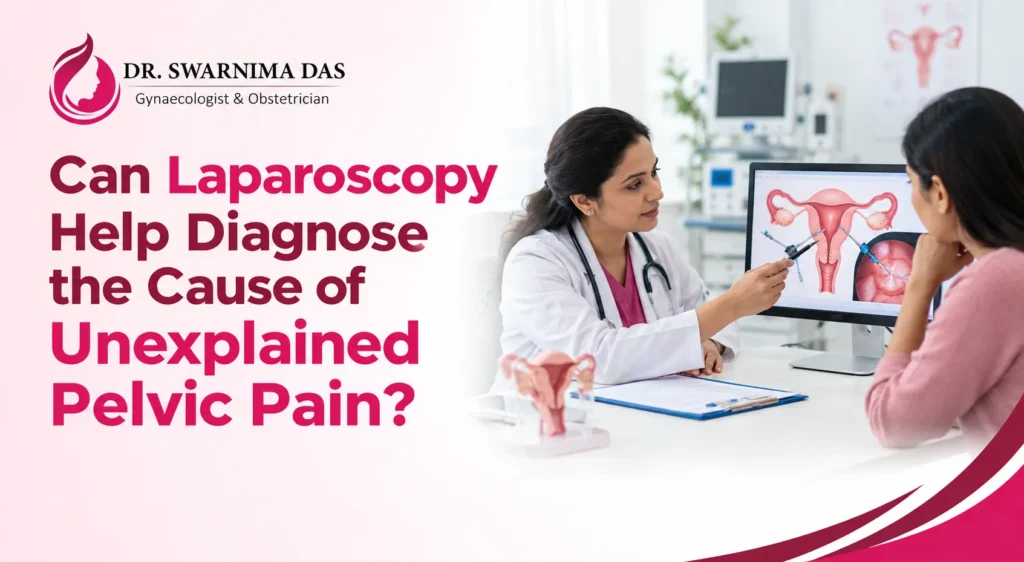
If pain continues despite a normal scan, other tests and a fair trial of treatment, your doctor may talk to you about looking inside the pelvis directly. A diagnostic laparoscopy uses a tiny camera to check the uterus, tubes, ovaries and nearby tissues for problems that scans can miss, such as endometriosis or adhesions.
If something treatable is found, the doctor may be able to address it in the same sitting through operative laparoscopy, provided this has been discussed and consented to beforehand. If the concern is more about abnormal bleeding or the inside of the uterus, hysteroscopy services may be advised instead. You can read about all procedures in the clinic’s overview of laparoscopy services.
Laparoscopy is not needed by everyone. It is usually considered only when the cause is still unclear and the pain is affecting your daily life.
Pelvic Pain and Fertility
Some causes of ongoing pelvic pain, such as endometriosis, adhesions and tubal problems, can also make it harder to conceive. If you are trying to get pregnant, it is worth telling your doctor early, because an infertility evaluation can sometimes be planned along with the pain workup. If more support is needed later, the clinic also provides advanced infertility support.
What You Can Do While You Wait for Answers
While you work with your doctor to find the cause, these steps may help you cope:
- Keep your pain diary: It helps your doctor spot patterns.
- Use gentle heat: A warm compress on the lower abdomen can ease cramping.
- Stay gently active: Walking and light stretching are often better than staying still.
- Take medicines only as advised: Do not rely on painkillers for weeks without a proper diagnosis.
- Track your periods: Note flow, clots and pain on each day.
- Do not ignore it: Pain that keeps returning should not be brushed off as “normal.”
Warning Signs That Need Prompt Attention
See a doctor soon, and do not wait for a routine appointment, if you have:
- Sudden, severe pelvic pain
- Fever along with lower abdominal pain
- Heavy bleeding or bleeding after menopause
- Fainting or extreme weakness
- Pain along with a missed period, which needs urgent evaluation
- Pain that is getting steadily worse
Regular check-ups and preventive care also help catch gynecological problems earlier, before they become harder to manage.
Final Thoughts
A normal ultrasound can feel like a dead end, but it is only the start of the process. With a careful history, the right follow-up tests and a step-by-step plan, most women get closer to a clear answer. You do not have to live with pain and wonder why.
Disclaimer: This article is for general awareness only and is not a substitute for professional medical advice, diagnosis or treatment. The cause of pelvic pain can only be identified by a qualified doctor after a proper evaluation. Results and recovery vary from person to person, and no outcome is guaranteed.
FAQs:-
Q1. Why do I have pelvic pain even though my ultrasound is normal?
Ultrasound can miss small or deep problems like early endometriosis, thin adhesions, mild infection, and muscle, bowel or bladder causes. A normal report means nothing obvious was seen on that test, not that the pain is imaginary.
Q2. What tests are done if ultrasound is normal but pelvic pain continues?
Your doctor may suggest a repeat or focused scan timed to your cycle, urine tests and swabs for infection, blood tests, or an MRI in selected cases. Not everyone needs every test. The choice depends on your symptoms and history.
Q3. Can endometriosis cause pelvic pain with a normal ultrasound?
Yes. Early or small patches of endometriosis often do not show on ultrasound. If the pain stays unexplained after other steps, a diagnostic laparoscopy may be discussed so the doctor can look inside the pelvis directly.
Q4. When should I see a gynecologist for pelvic pain with a normal scan?
See a gynecologist if the pain keeps returning, affects your periods, sleep, work or intimacy, or has lasted more than a few weeks. Seek urgent care for sudden severe pain, fever with abdominal pain, heavy bleeding, fainting, or pain with a missed period.
Q5. Is laparoscopy needed if the ultrasound is normal?
Not always. Most women begin with an examination, basic tests and a trial of treatment. Laparoscopy is considered only when the cause is still unclear and pain affects daily life.