

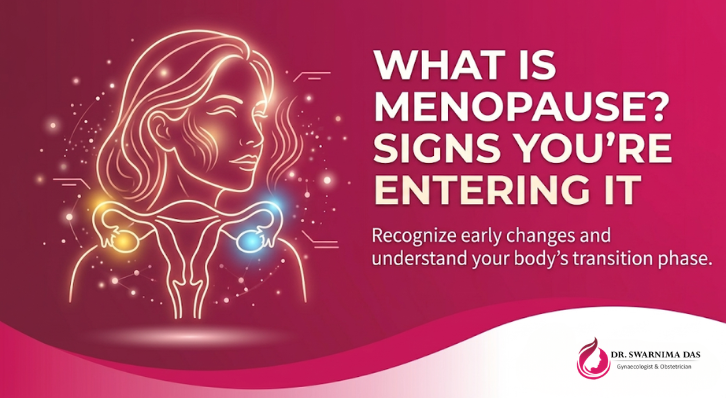
Many women begin searching what is menopause when they notice unexpected changes like irregular periods or hot flashes. Menopause is a natural biological phase, but the symptoms and timing can vary widely from person to person.
Understanding early signs helps you recognize what is normal and when medical advice may be helpful.
What Is Menopause?
Menopause is defined as the time when a woman has not had a menstrual period for 12 consecutive months. It marks the end of reproductive years.
Typical Age Range
- Usually occurs between 45 and 55 years
- In India, the average age is around 46–50 years
It does not happen suddenly. It is part of a gradual transition.
What Happens in the Body During Menopause?
Menopause occurs due to a decline in reproductive hormones, especially estrogen and progesterone.
Key Hormonal Changes
- Reduced estrogen production
- Irregular ovulation
- Changes in menstrual cycle patterns
These hormonal shifts affect multiple systems in the body, including mood, sleep, and metabolism.
Early Signs You’re Entering Menopause
The transition phase before menopause is called perimenopause. This is when most early symptoms appear.
Common Early Signs
- Irregular periods (shorter, longer, or skipped cycles)
- Hot flashes (sudden warmth in the face or body)
- Night sweats
- Mood changes or irritability
- Sleep disturbances
- Reduced concentration
These symptoms may begin several years before periods stop completely.
Common Symptoms of Menopause
Symptoms vary from mild to significant depending on hormonal changes and overall health.
Physical Symptoms
- Hot flashes and sweating
- Vaginal dryness
- Weight gain or slowed metabolism
- Joint or muscle discomfort
Emotional and Cognitive Symptoms
- Mood swings
- Anxiety or low mood
- Difficulty sleeping
- Reduced memory or focus
Not all women experience every symptom, and severity differs.
Menopause vs Perimenopause – Key Differences
Understanding the difference helps avoid confusion.
Perimenopause
- Transition phase before menopause
- Periods become irregular
- Hormone levels fluctuate
Menopause
- No periods for 12 months
- Hormone levels remain consistently low
- Symptoms may continue but stabilize over time
When Should You See a Doctor?
While menopause is natural, some symptoms require evaluation.
Consult a doctor if you notice:
- Very heavy or prolonged bleeding
- Bleeding after periods have stopped
- Severe mood changes affecting daily life
- Persistent sleep problems
- Symptoms starting before age 40
Women in Bhubaneswar experiencing these symptoms may consider consulting a qualified gynecologist for proper evaluation.
How to Manage Symptoms Safely
Management depends on symptom severity and individual health conditions.
Lifestyle Measures
- Balanced diet rich in calcium and vitamin D
- Regular physical activity
- Stress management techniques
- Adequate sleep
Medical Options (if needed)
- Hormone therapy (in selected cases)
- Non-hormonal medications
- Vaginal moisturizers or lubricants
Treatment decisions should always be individualized.
Importance of Regular Gynecological Checkups
Regular checkups to help monitor:
- Bone health
- Hormonal balance
- Risk of conditions like osteoporosis
Routine screening also helps address symptoms early and maintain overall well-being.
Risks and Limitations
- Symptoms vary widely between individuals
- Some symptoms may overlap with other medical conditions
- Early menopause (before 40) may require further evaluation