


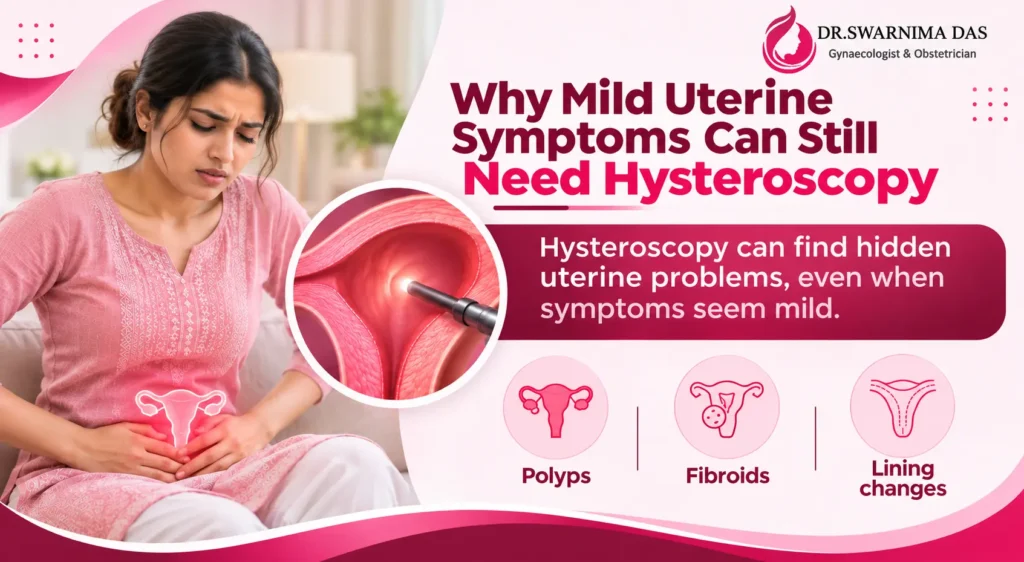
A little spotting between periods. Slightly heavier flow than usual. Mild cramps that come and go. Many women ignore these signs because they do not seem serious enough for a procedure. So when a doctor suggests a hysteroscopy, it can feel like an overreaction.
But the size of a symptom does not always match the size of the problem. This article explains why hysteroscopy for uterine problems is sometimes advised even when symptoms are mild, and what the procedure actually involves.
What Is Hysteroscopy?
Hysteroscopy is a procedure in which a thin, lighted tube with a tiny camera is passed through the vagina and cervix into the uterus. There are no cuts on the abdomen. The doctor gets a clear view of the inside of the uterus on a screen and can check the lining and the openings of the fallopian tubes.
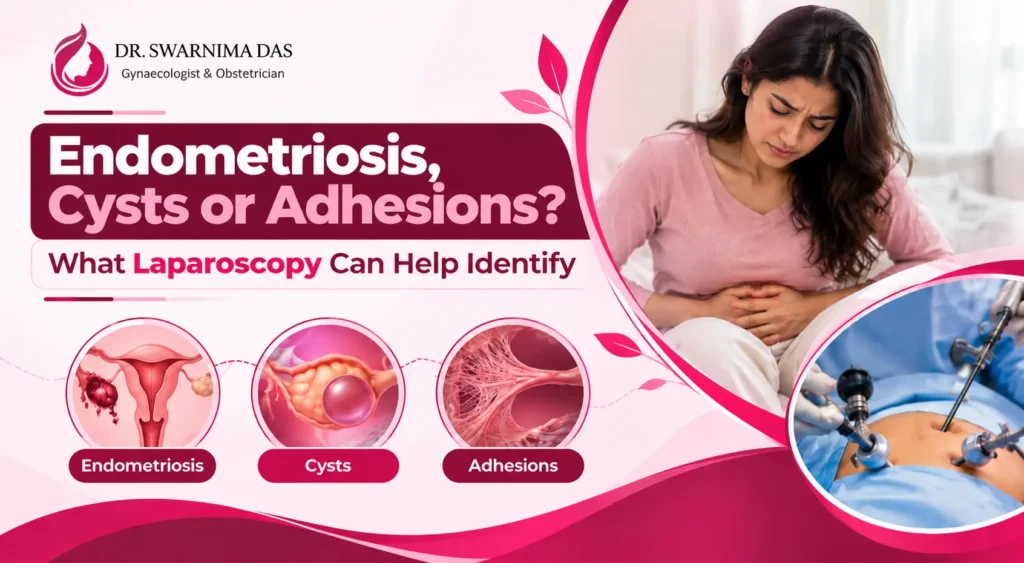
At Dr. Swarnima Das’s clinic, hysteroscopy services are part of the wider range of laparoscopy services offered for uterine and pelvic concerns.
Why Can Mild Symptoms Still Point to a Real Problem?
The uterus can develop small changes that cause very few symptoms for a long time. A small polyp or a small growth inside the cavity may only cause light spotting. A thin band of scar tissue may only make periods lighter. Because the symptoms are mild, women often wait months or years before seeing a doctor.
Mild symptoms also do not mean the problem will stay mild. Some uterine conditions can quietly affect fertility, cause repeated pregnancy loss or lead to heavier bleeding later, so finding them early gives you more options.
Why Can Ultrasound Miss Problems Inside the Uterus?
Ultrasound is a useful first test, and it is often the reason a problem is suspected in the first place. But it shows the uterus through images, and some changes inside the cavity are small, flat or hidden by the thickness of the lining. A scan may also be difficult to read depending on the day of your cycle.
This is why a doctor may say a scan looks “unclear” or “borderline” and suggest looking inside directly. With hysteroscopy, the doctor does not have to guess from images.
Which Uterine Problems Can Hysteroscopy Help Identify?
Depending on your symptoms and history, hysteroscopy can help check for:
- Uterine polyps: Small soft growths on the uterine lining that may cause spotting or irregular bleeding
- Submucosal fibroids: Fibroids that grow into the uterine cavity and can cause heavy periods or affect pregnancy. If fibroids are found, the clinic also offers fibroid and cyst management
- Intrauterine adhesions: Scar tissue inside the uterus, often after infection, surgery or a procedure after miscarriage
- Uterine septum: A band of tissue dividing the cavity, present from birth, which may be linked to pregnancy problems
- Thickened or unusual uterine lining: Which may need further evaluation
- Retained tissue: Small pieces left behind after a miscarriage or delivery
- A displaced intrauterine device (IUD): Checking its position when it cannot be seen clearly
Which Mild Symptoms Should Make You Think of Hysteroscopy?
You do not need to have all of these. Even one that keeps happening is worth discussing with your doctor:
- Spotting or bleeding between periods
- Periods that have become heavier or longer than before
- Unusually light periods, or periods that have almost stopped after a procedure
- Mild pelvic cramps or a feeling of heaviness
- Repeated miscarriages
- Difficulty getting pregnant
- An ultrasound report that mentions a polyp, a thick lining or an “irregular cavity”
- Unusual vaginal discharge
Any bleeding after menopause should be checked by a doctor promptly, even if it is just a few spots.
Diagnostic and Operative Hysteroscopy: What Is the Difference?
A diagnostic hysteroscopy is done to look inside the uterus and find the cause of a symptom. In many cases, if a small problem such as a polyp, a septum or some adhesions is found, the doctor may be able to treat it during the same procedure. This is called operative hysteroscopy, and it avoids a second procedure. Whether treatment can be done in the same sitting depends on what is found and on what was discussed and consented to beforehand.
If the concern is more about the outer surface of the uterus, the ovaries or the tubes, your doctor may suggest a diagnostic laparoscopy instead of, or along with, hysteroscopy. When something needs to be treated in the pelvis, operative laparoscopy may be advised.
What Happens During and After Hysteroscopy?
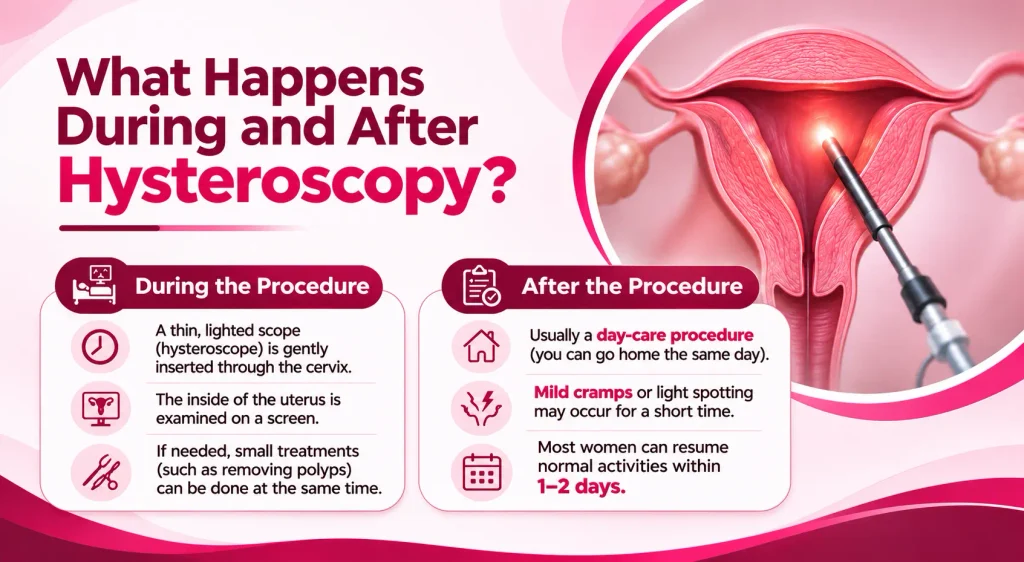
The procedure is usually short. Depending on the reason for it and on your comfort, it may be done with local anaesthesia, sedation or general anaesthesia, and your doctor will explain what is planned for you. It is often done as a day-care procedure.
Afterwards, mild cramping and light spotting for a few days are common. Most women return to light routine activity quickly, but recovery differs from person to person, so follow the advice you are given. Contact your doctor if you have fever, heavy bleeding, severe pain or foul-smelling discharge.
Hysteroscopy and Fertility
The inside of the uterus matters a great deal for pregnancy. Polyps, fibroids inside the cavity, adhesions and a septum can sometimes make it harder to conceive or to carry a pregnancy. If you are trying to get pregnant, an infertility evaluation often includes a check of the uterine cavity, and hysteroscopy may be suggested if something is unclear. If more care is needed later, advanced infertility support is available.
Does Everyone With Mild Symptoms Need Hysteroscopy?
No. Many women with mild symptoms are managed with an examination, simple tests and follow-up. Hysteroscopy is usually suggested when symptoms continue, when a scan shows something unclear, or when fertility or pregnancy loss is involved. A proper visit for general gynecology helps decide whether it is the right step for you, and you should always feel free to ask your doctor why it is being advised.
Warning Signs You Should Not Ignore
See a gynecologist soon if you have:
- Bleeding between periods or after intercourse
- Bleeding after menopause
- Periods that keep getting heavier
- Pelvic pain that keeps returning
- Repeated pregnancy loss
- Difficulty conceiving after a year of trying, or earlier if you are over 35
- Heavy bleeding, fainting or severe pain, which need urgent care
Regular check-ups and preventive care also help catch uterine changes before they grow into bigger problems.
Final Thoughts
Mild symptoms are easy to put off, but the uterus can show early warning signs in quiet ways. Hysteroscopy is not needed by everyone, but when symptoms keep returning or a scan is not clear, it can help find a problem early and plan the right care.
If you have been noticing changes in your periods or have had trouble conceiving, you can learn more about Dr. Swarnima Das and her approach to women’s health, or contact us to book a consultation. You can also read more helpful articles on the clinic blog.
Disclaimer: This article is for general awareness only and is not a substitute for professional medical advice, diagnosis or treatment. Whether hysteroscopy is suitable for you can only be decided by a qualified doctor after a proper evaluation. Results and recovery vary from person to person, and no outcome is guaranteed.
Frequently Asked Questions
Why is hysteroscopy advised when my symptoms are mild?
Mild symptoms such as light spotting or slightly heavier periods can come from polyps, fibroids inside the uterus or adhesions. These can be small and easy to miss on a scan. Hysteroscopy lets the doctor look directly inside the cavity, so the cause can be found early.
Can a uterine polyp cause only mild symptoms?
Yes. Many polyps cause only spotting between periods or slightly irregular bleeding, and some cause no symptoms at all. They are sometimes found only during a fertility workup or a scan. Your doctor will advise whether the polyp needs to be removed.
Is hysteroscopy painful, and does it need anaesthesia?
Most women feel some cramping. The type of anaesthesia depends on why the procedure is being done and on your comfort, and can range from local anaesthesia to sedation or general anaesthesia. Your doctor will explain what is planned for you before the procedure.
Can hysteroscopy help with infertility or repeated miscarriage?
It can help check for problems inside the uterus, such as polyps, adhesions or a septum, that may be linked to difficulty conceiving or pregnancy loss. It does not explain every case, and no outcome is guaranteed. It is usually one part of a wider infertility evaluation.
Can a normal ultrasound still need hysteroscopy?
Sometimes, yes. Ultrasound can miss small or flat changes inside the uterus. If symptoms continue even though the scan is normal, your doctor may suggest hysteroscopy to look inside directly. This is decided case by case, after a proper evaluation.