


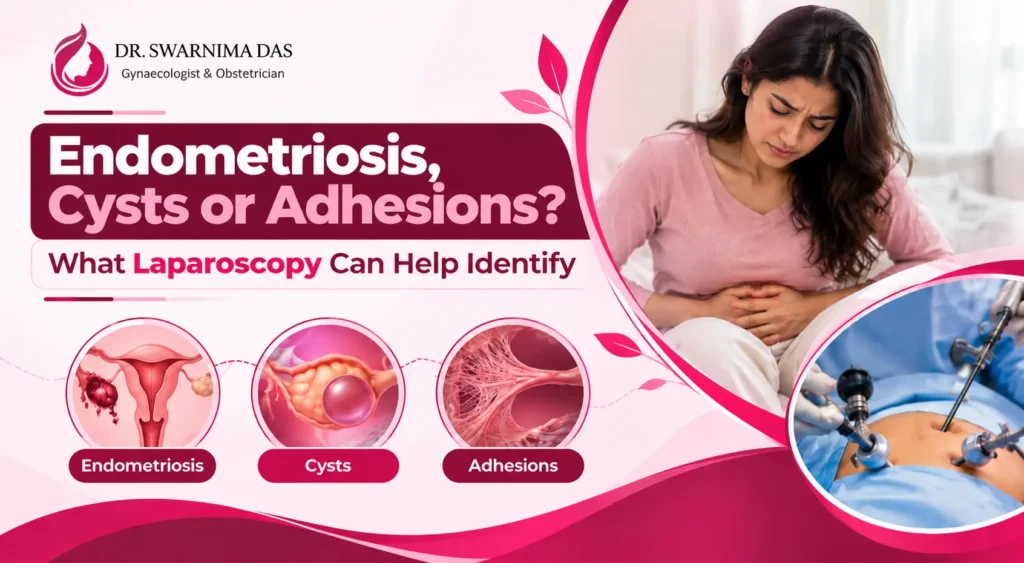
Painful periods, constant pelvic ache, pain during intercourse or trouble getting pregnant can have many causes. Three of the most common are endometriosis, ovarian cysts and pelvic adhesions. They can feel very similar, and sometimes they are present together. That is why many women are left wondering what is really going on.
This is where endometriosis cysts adhesions laparoscopy becomes an important topic. Laparoscopy lets the doctor look directly inside the pelvis, which can help identify problems that routine tests do not always show. This article explains what each condition is, how they differ and how laparoscopy helps.
Why These Three Conditions Are Often Confused
Endometriosis, cysts and adhesions can all cause lower abdominal pain, pain during periods and discomfort during intercourse. Some also affect fertility. Because the symptoms overlap, it is hard to tell them apart from symptoms alone, and ultrasound does not always show the full picture. A proper evaluation in general gynecology is the first step in sorting out which one, if any, may be responsible.
What Is Endometriosis?
Endometriosis is a condition where tissue similar to the lining of the uterus grows outside it, such as on the ovaries, fallopian tubes or the surface of the pelvis. This tissue responds to hormones each month, which can cause inflammation and pain.
Common symptoms include:
- Painful periods that get worse over time
- Pain during or after intercourse
- Chronic pelvic pain, even outside periods
- Pain with bowel movements or urination, especially during periods
- Heavy or irregular bleeding
- Difficulty conceiving
Early or small patches of endometriosis may not appear on an ultrasound, which is why it can go unnoticed for years.
What Are Ovarian Cysts?
Ovarian cysts are fluid-filled sacs that form on or inside the ovaries. Many are harmless and go away on their own, but some cause symptoms or need monitoring.
Possible symptoms include:
- Dull or sharp pain on one side of the lower abdomen
- A feeling of fullness, pressure or bloating
- Pain during intercourse
- Irregular periods
- Sudden severe pain, which needs urgent attention if a cyst twists or bursts
Cysts are usually seen on ultrasound. However, a cyst linked to endometriosis can behave differently from a simple cyst, and your doctor will decide what further evaluation is needed. If a cyst or fibroid is confirmed, the clinic also provides fibroid and cyst management.
What Are Pelvic Adhesions?
Adhesions are bands of scar tissue that can make organs inside the pelvis stick together. They can form after surgery, pelvic infection, endometriosis or a previous cesarean delivery.
Symptoms may include:
- Chronic or recurring pelvic pain
- Pain that changes with movement or position
- Pain during intercourse
- Bowel-related discomfort
- Difficulty conceiving, if the tubes or ovaries are affected
Thin adhesions rarely show on ultrasound, so they are often found only when the doctor looks inside the pelvis.
How Do Endometriosis, Cysts and Adhesions Differ?
| Feature | Endometriosis | Ovarian Cysts | Adhesions |
| What it is | Tissue similar to uterine lining outside the uterus | Fluid-filled sacs on the ovaries | Bands of scar tissue between organs |
| Typical pain pattern | Often worse around periods | Often one-sided, may come and go | Can be constant or change with movement |
| Usually seen on ultrasound? | Often not, in early stages | Usually yes | Rarely |
| May affect fertility? | Yes, in some cases | Sometimes | Sometimes |
These are general patterns, and every woman is different. Only a doctor can tell what applies to you.
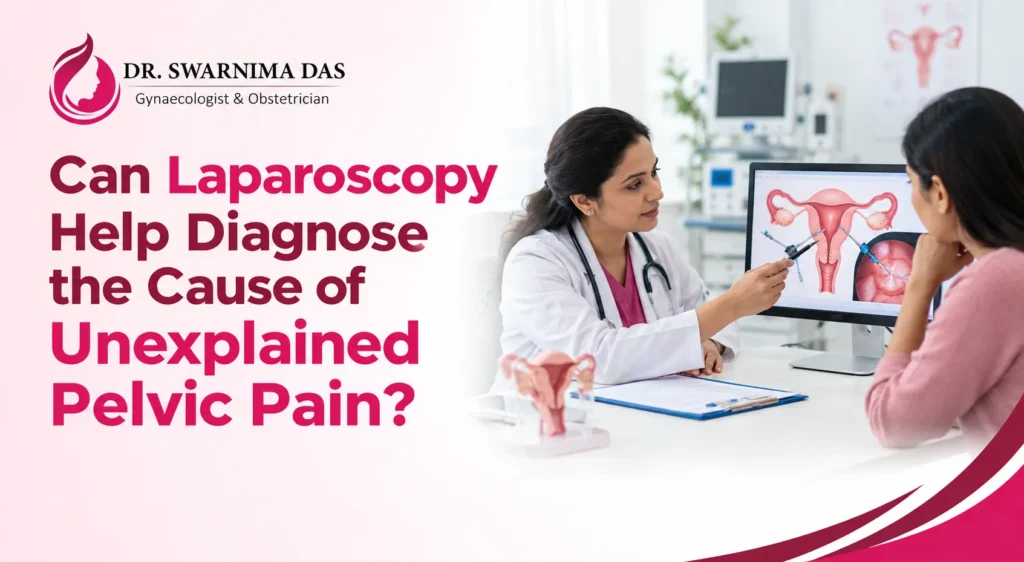
How Does Laparoscopy Help Identify the Cause?
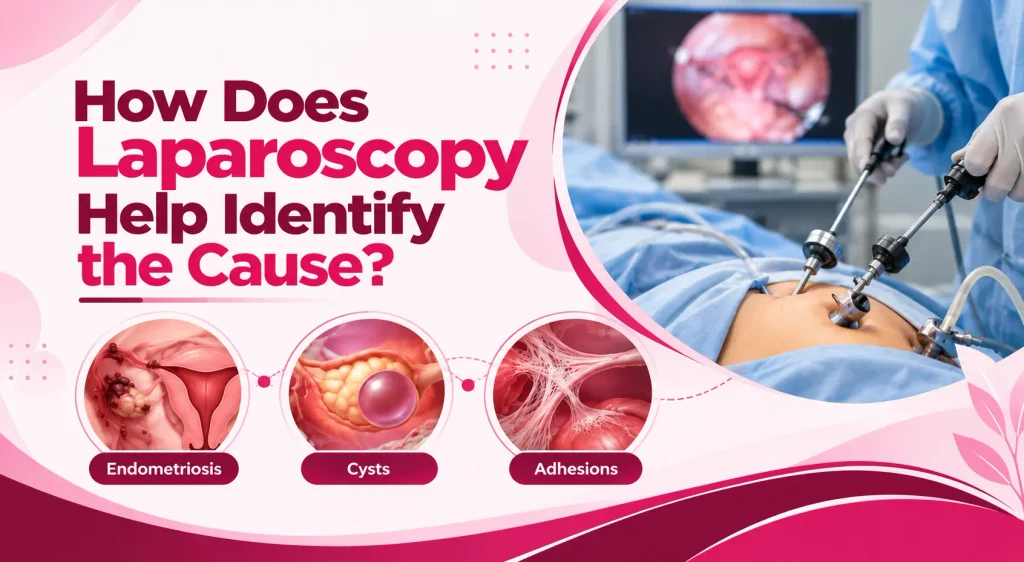
Laparoscopy is a minimally invasive procedure done under anaesthesia. A thin tube with a tiny camera is passed through a small cut near the navel, giving the doctor a magnified view of the uterus, ovaries, tubes and the lining of the pelvis.
This direct view can help the doctor:
- See patches of endometriosis that scans did not show
- Check the size, position and nature of ovarian cysts
- Find and assess adhesions, and see how much they affect the organs
- Check whether the fallopian tubes look healthy
- Rule out structural causes if the pelvis looks normal
At Dr. Swarnima Das’s clinic, diagnostic laparoscopy is used when routine tests do not explain the symptoms. You can also see the full range of laparoscopy services offered.
Can the Problem Be Treated During the Same Procedure?
Sometimes, yes. If the doctor finds something that can be treated safely, such as certain cysts, adhesions or endometriosis, it may be addressed in the same sitting through operative laparoscopy. This depends on what is found, on your overall health and on what has been discussed and consented to beforehand.
If the main concern is inside the uterus, such as abnormal bleeding, hysteroscopy services may be advised instead of, or along with, laparoscopy.
When Is Laparoscopy Recommended?
A doctor may suggest laparoscopy when:
- Pelvic pain has lasted for months without a clear cause
- Ultrasound and other tests are normal or unclear
- Medicines have not given enough relief
- Endometriosis, adhesions or a complex cyst is suspected
- Pain or fertility concerns are affecting daily life
It is not the first test for everyone. Most women start with an examination and basic investigations. If your scan is normal but pain continues, our guide on what to do next explains the usual steps before laparoscopy.
Endometriosis, Cysts, Adhesions and Fertility
All three conditions can sometimes make it harder to conceive, depending on their location and severity. If you have pelvic symptoms and are planning a pregnancy, tell your doctor early. An infertility evaluation can be planned along with the pain workup, and advanced infertility support is available if further care is needed.
Warning Signs You Should Not Ignore
See a gynecologist soon if you have:
- Periods that are becoming more painful over time
- Pelvic pain that keeps returning
- Pain during intercourse
- Heavy bleeding or bleeding between periods
- Difficulty conceiving after a year of trying, or earlier if you are over 35
- Sudden, severe pelvic pain, fever or fainting, which needs urgent care
Regular check-ups and preventive care help catch problems earlier.
Final Thoughts
Endometriosis, cysts and adhesions can look alike from the outside, but they are different conditions that may need different care. Laparoscopy is not needed by everyone, but when scans and other tests do not give answers, it can help the doctor see what is happening inside and plan the right next step.
Frequently Asked Questions
Can laparoscopy tell the difference between endometriosis, cysts and adhesions?
Yes, in many cases. Laparoscopy gives the doctor a direct view of the pelvic organs, so patches of endometriosis, cysts and adhesions can be seen and assessed. Sometimes the doctor may also take a small tissue sample for further testing. A diagnostic laparoscopy is advised only after evaluation.
Can endometriosis be missed on ultrasound?
Yes. Early or small patches of endometriosis often do not appear on ultrasound. A normal scan does not rule it out, so if symptoms continue, your doctor may suggest further steps.
Do ovarian cysts always need laparoscopy?
No. Many cysts are small, harmless and simply monitored with follow-up scans. Laparoscopy is considered when a cyst is large, causes symptoms, persists or looks complex. Your doctor can guide you through fibroid and cyst management options.
Can adhesions cause pelvic pain?
Yes. Adhesions can pull on organs or limit their movement, which may cause chronic or recurring pelvic pain. They are rarely visible on ultrasound, so they are often identified only through laparoscopy.
Can the problem be treated during the same laparoscopy?
In some cases, yes. If a treatable problem is found, the doctor may address it through operative laparoscopy, provided it was discussed and consented to beforehand. This depends on the findings and your condition.