


You have heavy periods, pain or irregular bleeding, but the scan report says “normal.” Or the opposite happens: the scan shows a fibroid or a cyst, yet you feel perfectly fine. Either way, it is confusing. Many women start wondering whether the pain is in their head, or whether the report is wrong.
Neither is usually true. Gynaecological symptoms not matching scan results is a common situation, and there are clear reasons behind it. This article explains why it happens and what the next steps usually look like.
Why Can Symptoms and Scan Results Differ?
A scan is a picture taken at one moment. Symptoms are what you live with every day. The two do not always line up, for reasons such as:
- Limits of the test: Ultrasound shows size and shape well, but it can miss very small, flat or deep changes.
- Timing in the cycle: The uterus and ovaries look different on different days of the cycle, so the same problem may be easier or harder to see.
- Function versus structure: Some problems, such as hormonal imbalance or nerve and muscle pain, affect how the body works without changing how organs look.
- Image quality: Body build, bowel gas or a full or empty bladder can affect how clearly organs are seen.
- Reporting limits: A scan report describes what is visible. It cannot always explain why you feel a certain way.
Situation 1: You Have Symptoms, but the Scan Is Normal
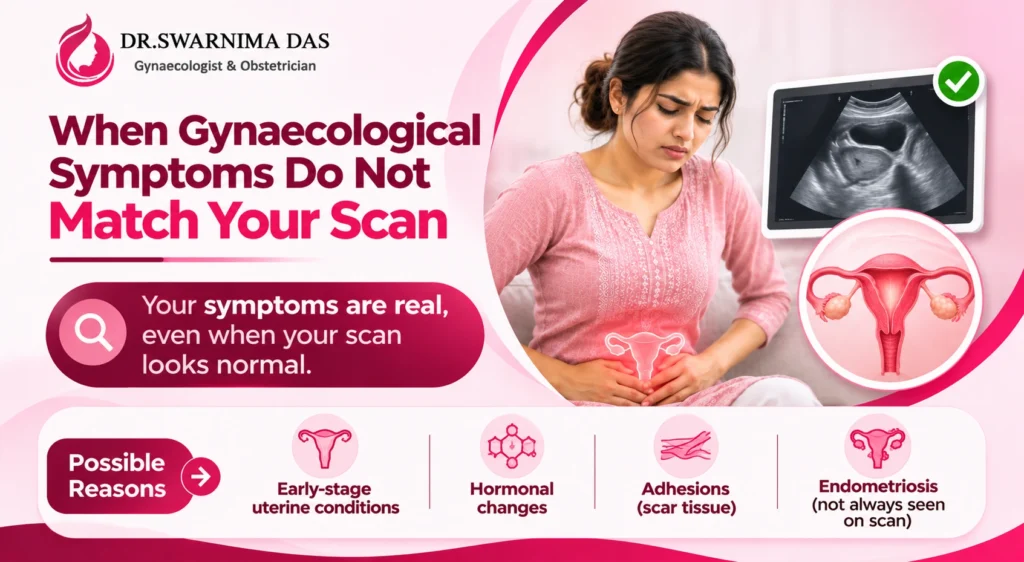
This is the most common version of the problem. A normal scan means nothing obvious was seen on that test. It does not mean nothing is wrong. Possible causes include:
- Early or small endometriosis
- Thin pelvic adhesions
- Small polyps or changes inside the uterine cavity
- Hormonal causes of irregular or heavy bleeding
- Mild or old pelvic infection
- Pelvic floor muscle tension
- Bowel or bladder problems that feel like gynaecological pain
A detailed visit for general gynecology is the best starting point, because the history and examination often give clues that a scan cannot.
Situation 2: The Scan Shows Something, but You Have No Symptoms
Sometimes a scan done for another reason shows a small fibroid, a cyst or a thickened lining, while you feel completely well. This is also common, and it does not always mean treatment is needed. Many small fibroids and simple cysts cause no trouble and are simply watched with follow-up scans.
Your doctor will consider the size, the type, your age and your plans for pregnancy before advising anything. If a finding does need attention, the clinic provides fibroid and cyst management.
Situation 3: The Scan Shows a Finding, but It Does Not Explain Your Symptoms
Here, a fibroid or cyst is seen, but your pain or bleeding seems too much for its size or location. The finding may be real but unrelated, or it may be one of several causes at work together. Your doctor may look for other contributors before deciding that the scan finding is the reason for your symptoms.
What Usually Happens Next?
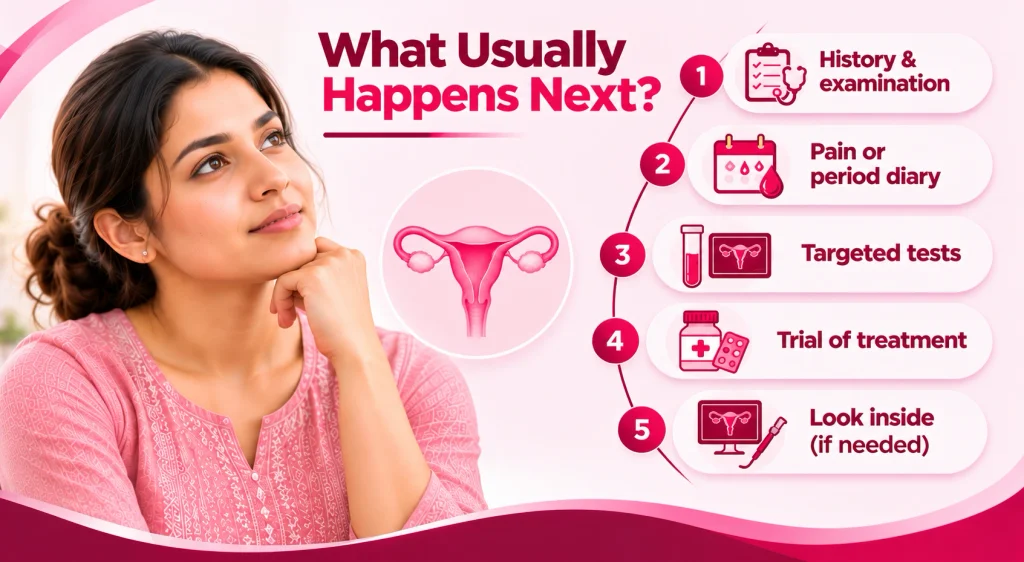
There is no single path, but the steps commonly follow this order:
- Detailed history and examination: Timing, type and pattern of pain or bleeding, and what makes it better or worse.
- A pain or period diary: One to two months of notes on dates, severity and triggers often shows patterns clearly.
- Targeted tests: A repeat or focused scan timed to your cycle, urine tests, swabs for infection, blood tests or advanced imaging such as an MRI in selected cases.
- A trial of treatment: If a likely cause is suspected, your doctor may suggest medicines or other measures and see how you respond.
- Looking inside directly: If symptoms continue and the cause is still unclear, a camera procedure may be discussed.
Not everyone needs every step. The aim is to move in a sensible order without putting you through unnecessary tests.
When Does a Doctor Suggest Looking Inside Directly?
If symptoms continue despite normal or unclear tests, direct visualisation can sometimes give answers that images cannot.
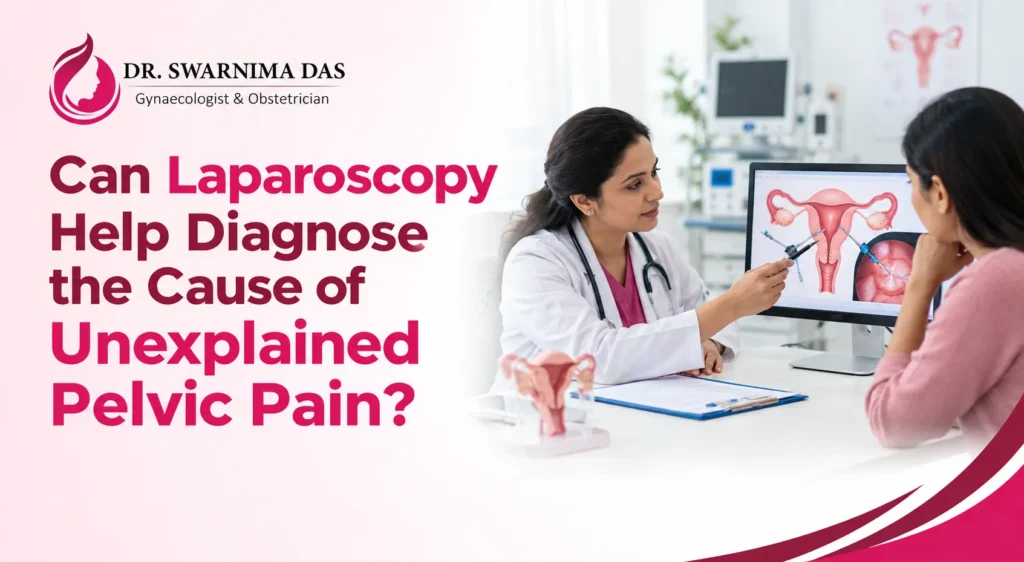
- A diagnostic laparoscopy allows the doctor to examine the outside of the uterus, the ovaries, tubes and pelvic lining for problems such as endometriosis or adhesions.
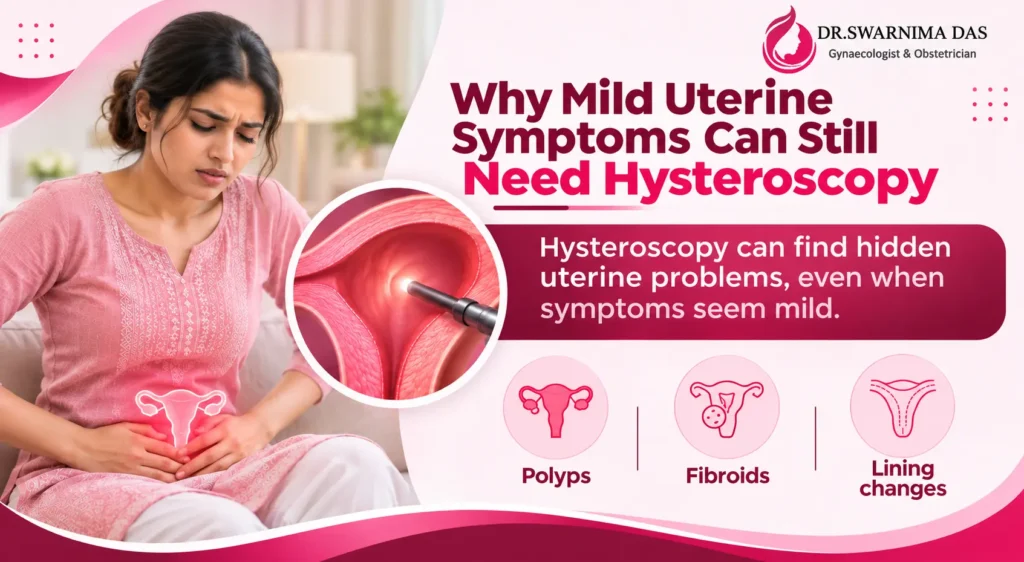
- Hysteroscopy services allow the doctor to look inside the uterine cavity, which is useful for abnormal bleeding, polyps or fertility concerns.
- If something treatable is found, the doctor may be able to address it in the same sitting through operative laparoscopy, provided it was discussed and consented to beforehand.
You can see the full range under the clinic’s laparoscopy services. These procedures are not needed by everyone, and the decision is made only after a proper evaluation.
Symptoms, Scans and Fertility
If you are trying to conceive, a mismatch between symptoms and scan can feel even more stressful. Some causes that scans miss, such as adhesions, small uterine changes or tubal problems, can affect fertility. Tell your doctor early, because an infertility evaluation can be planned alongside the symptom workup. Advanced infertility support is available if further care is needed.
How to Get the Most Out of Your Next Doctor Visit
- Bring all your previous scan reports and, if possible, the images
- Carry your pain or period diary
- Write down your questions in advance
- Mention anything that makes symptoms better or worse
- Share your pregnancy plans, even if they are for the future
- Ask what each suggested test is meant to find
If you are still unsure after a visit, asking for a clear explanation or a second opinion is reasonable.
Warning Signs That Need Prompt Attention
See a doctor soon, and do not wait for a routine appointment, if you have:
- Sudden, severe pelvic pain
- Fever along with lower abdominal pain
- Heavy bleeding or soaking pads quickly
- Bleeding after menopause
- Fainting or extreme weakness
- Pain along with a missed period
Regular check-ups and preventive care also help catch changes early, even when you feel well.
Final Thoughts
A scan is a useful tool, but it is not the whole story. When your symptoms and your report do not match, it does not mean you are imagining things. It means the next step is a careful history, the right follow-up tests and, if needed, a closer look.
If you have been told your scan is normal but you still do not feel well, you can learn more about Dr. Swarnima Das and her approach to women’s health, or contact us to book a consultation. You can also read more helpful articles on the clinic blog.
Disclaimer: This article is for general awareness only and is not a substitute for professional medical advice, diagnosis or treatment. The cause of symptoms can only be identified by a qualified doctor after a proper evaluation. Results and recovery vary from person to person, and no outcome is guaranteed.
Frequently Asked Questions
Can I have gynaecological symptoms with a normal scan?
Yes. Ultrasound can miss small or deep problems such as early endometriosis, thin adhesions or small changes inside the uterus. Hormonal, muscle or bowel-related causes may also not show on a scan. A normal report means nothing obvious was seen, not that the pain is imaginary.
Why does my scan show a fibroid or cyst but I have no symptoms?
Many fibroids and simple cysts are small and cause no trouble. They are often found by chance during a scan done for another reason. Your doctor will usually advise follow-up scans, and treatment is considered only if they grow or cause symptoms.
Should I get a second opinion if my scan does not match my symptoms?
It is reasonable to ask for one if you are not satisfied with the explanation or if symptoms keep continuing. Carry all your reports and images so the next doctor can compare them properly.
What tests are done after a normal scan if symptoms continue?
Your doctor may suggest a repeat scan timed to your cycle, urine tests, swabs, blood tests, or an MRI in selected cases. If the cause is still unclear, a diagnostic laparoscopy or hysteroscopy may be discussed.
When should I see a gynecologist if my symptoms and scan do not match?
See a gynecologist if symptoms keep returning, affect your daily life, or last more than a few weeks. Seek urgent care for sudden severe pain, fever with abdominal pain, heavy bleeding or fainting.