


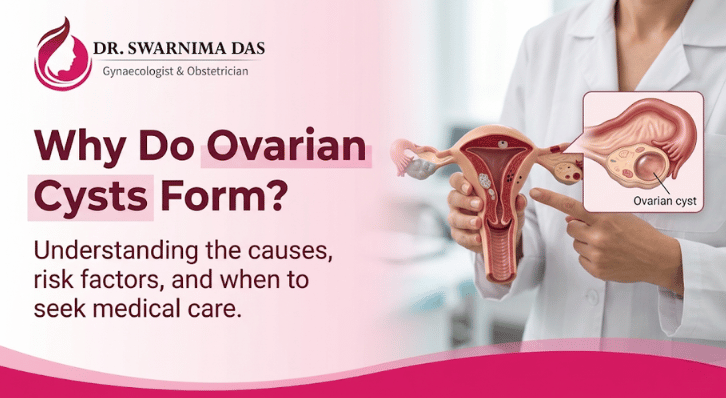
Many women wonder why do ovarian cysts form, especially after an ultrasound report or when experiencing pelvic discomfort. Ovarian cysts are fluid-filled sacs that develop on or inside the ovaries.
In many cases, they are a normal part of the menstrual cycle and may resolve on their own. However, some cysts may require monitoring or treatment depending on their type and symptoms.
What Are Ovarian Cysts?
Ovarian cysts are sacs filled with fluid that form in or on the ovaries.
They are common during reproductive years and often develop naturally as part of ovulation.
Most cysts are:
- Benign (non-cancerous)
- Temporary
- Asymptomatic
However, certain types may cause symptoms or complications.
Why Do Ovarian Cysts Form?
Ovarian cysts usually form due to normal hormonal changes during the menstrual cycle.
Key Reasons:
1. Hormonal Fluctuations
Hormones regulate ovulation. If the process is disrupted, cysts may form.
2. Ovulation Process
During ovulation:
- A follicle grows to release an egg
- If the follicle does not release the egg, it can form a cyst
- Sometimes, the follicle reseals and fills with fluid
This leads to functional cysts, the most common type.
3. Hormonal Imbalance
Conditions like PCOS can lead to multiple small cysts due to irregular ovulation.
4. Pregnancy
A cyst may form early in pregnancy to support hormonal production until the placenta develops.
5. Endometriosis
Tissue similar to the uterine lining grows outside the uterus and may form cysts (endometriomas).
Types of Ovarian Cysts
Understanding the type helps determine whether the cyst is harmless or needs treatment.
Functional Cysts (Most Common)
- Follicular cyst
- Corpus luteum cyst
Usually harmless and resolve naturally.
Pathological Cysts
- Dermoid cyst
- Cystadenoma
- Endometrioma
These may require medical evaluation or treatment.
Common Causes and Risk Factors
Several factors increase the likelihood of cyst formation:
- Hormonal imbalance
- Irregular menstrual cycles
- PCOS
- Early menstruation onset
- Pregnancy
- Previous ovarian cyst history
- Fertility treatments
Lifestyle and hormonal health both play roles.
Symptoms of Ovarian Cysts
Many cysts cause no symptoms. However, when symptoms occur, they may include:
- Lower abdominal or pelvic pain
- Bloating or fullness
- Irregular periods
- Pain during intercourse
- Sudden sharp pain (possible rupture)
Warning Signs (Seek Medical Help)
- Severe abdominal pain
- Fever with pain
- Dizziness or fainting
- Rapid breathing
These may indicate complications like rupture or torsion.
When Should You See a Doctor?
Consult a gynecologist if:
- Pain persists for several days
- Periods become irregular
- You feel constant bloating
- Symptoms worsen suddenly
- You have a known cyst with increasing size
Women in Patia, Kanan Vihar, Chandrasekharpur, and nearby areas of Bhubaneswar experiencing these symptoms should seek medical evaluation for proper diagnosis.
How Are Ovarian Cysts Diagnosed?
Diagnosis typically involves:
- Pelvic examination
- Ultrasound scan (most common method)
- Blood tests (if needed)
Doctors assess:
- Size of cyst
- Type (simple vs complex)
- Symptoms
This helps guide treatment decisions.
Treatment Options for Ovarian Cysts
Treatment depends on type, size, and symptoms.
1. Observation (Watchful Waiting)
- Many cysts disappear within 1–3 menstrual cycles
- Regular monitoring is recommended
2. Medications
- Hormonal therapy may help regulate cycles
- Pain management if needed
3. Surgical Treatment
Recommended if:
- Cyst is large
- Persistent or growing
- Causing severe symptoms
- Suspicious in nature
Minimally invasive (laparoscopic) surgery is often used.
Can Ovarian Cysts Affect Fertility?
Most ovarian cysts do not affect fertility.
However, certain conditions like:
- PCOS
- Endometriosis
may impact reproductive health.
Early diagnosis helps manage these conditions effectively.
Safety Considerations and Limitations
- Not all cysts cause symptoms
- Some cysts resolve naturally
- Imaging may not always give complete clarity
- Follow-up is important for monitoring
Each case requires individual evaluation.
Medical Disclaimer
This article is for educational purposes only and does not replace medical advice. Please consult a qualified healthcare provider for diagnosis and treatment.